Just thinking about a panel discussion last night regarding the ICE invasion of the Twin Cities and asking myself– what would I do in that situation? What are the roles that we might each hold?
Just thinking about a panel discussion last night regarding the ICE invasion of the Twin Cities and asking myself– what would I do in that situation? What are the roles that we might each hold?
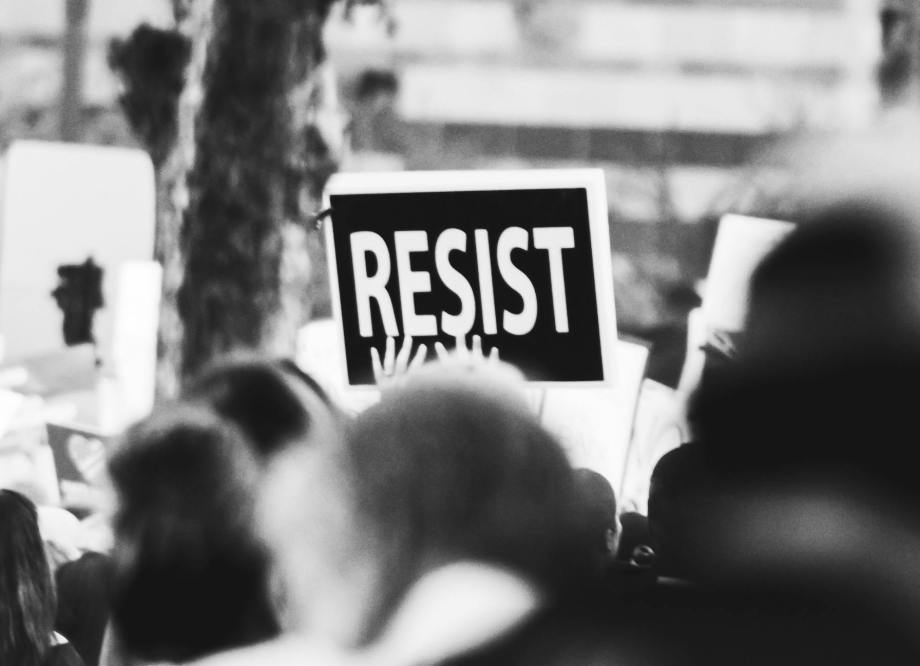
It was a great rally. It was many great rallies. It was more than 7 million people out in the streets saying “No Kings!” It was also simply a tool in the process of organizing.
I started as a professional community organizer back in the late 1990’s working for an organization called SOCM in East Tennessee. I was just out of college and had the justified anger and the will to fight every day for social social justice and the big environmental wins. I was there to stop the multinational corporations that were clearcutting the foresting and stripmining the hills. I knew if we just fought hard enough, rallied enough, yelled loud enough, we would win. We had to win. There was no other option. We had to save the world.
Every month I had to take on the hardest struggle of my organizing work. I had to first write my work plan then, even more challenging, I had to sit down with my boss, Mo, and review and edit that work plan. Every single month Mo would ask me the same question multiple times as we went down my list of things to do. She kept asking me over and over– “How does this move the work forward?”
That question still echoes in my mind. “How does this move the work forward?” Rallies are great. They are important. Writing to your legislator, voting, writing letters to the editor, signing petitions, volunteering, and some many activites are wonderful things. But, we must remember that each is simply a tool. What is it that we are working to do? It’s not enough to simply point out that Trump is not good for the US or the world. We have to develop and work toward a different answer.
Are we working to save democracy? What does democracy really look like? What is the role of the grassroots in a healthy, functioning democracy? Once we start asking ourselves those questions and really coming up with our vision of what a healthy, functioning democracy based in the power of the grassroots might look like then we can speak to that question “How does this move the work forward” with each and every action that we take. Each thing that we do needs to move toward the goal.
We don’t rally for the sake of rallying. Rallies are a tool. Let’s use them in the best ways possible. Let’s ask ourselves “How does this move the work forward?” When we make our path and goal clear the seven million engages beyond the day of the rally and the movement multiplies. We can win. First step is knowing what winning is. Is our goal to save or rebuild democracy or is it simply to get Trump out of office? Second step is figure out what we need to meet that goal. Third step is to determine how we get those things that we need whether it be redistricing or strong presidential candidate or any of a hundred other things. Next we prepare to act while asking ourselves every step of the way, “How does this move the work forward?”
It is a long and hard journey. We know that. We also know that long journeys are often much easier once we pull out a map. It’s time to create our map of where we want to go.
It’s been twelve years now since thousands of angry, scared, and broken hearted Wisconsinites spent weeks camping out on the cold marble floors of our state capitol in an attempt to protect workers rights. While we didn’t win an immediate victory, we did change what organizing looked like in Wisconsin and throughout the US.
I was the person that the Teaching Assistants Association (TAA) called on when they realized that what began as a small protest was going to become a massive event and had the possibility of becoming dangerous. They asked me to coordinate non-violence trainings. During the weeks in the capitol I worked with a great team to bring together dozens of skilled trainers to provide non-violence training to thousands of people and the people of Wisconsin stood strong and peaceful. Here are few thoughts that I shared back then. I think that they may still ring true in many of the struggles that we face today.
Thoughts on Being Part of the Wisconsin Movement
When I began Sustainable Life in Action back in 2013 the Grassroots Leadership College had only been closed for a year and I was trying to find enough work to keep my rent paid and figuring out how to keep doing community organizing. My dreams were of starting a new Grassroots Leadership College maybe statewide or maybe in northern Wisconsin along the shores of Lake Superior. It wasn’t too much later that I left Madison. Life didn’t take me to northern Wisconsin, but to Minnesota.
In those days, for me, being an activist still meant organizing people, coordinating trainings, taking part in protests, speaking at rallies, being a force, and fighting out loud in a non-violent yet intense way. While my work was for a better world most of my actions still landed in the realm of working against the evils. I loved my work. I loved getting to know people, making connections, supporting others in achieving their dreams, creating positive social change. We did create change. Every time we people connected and came to know each other, to see each other as valuable human beings we were creating change, not to mention all the battles won.
Despite my love for my life work I was burning out. That’s why I started Sustainable Life in Action. It was a tool to encourage my own self care as well as to support others in caring for themselves. It has been a helpful tool for me. I hope it has been for others as well.
My journey as an activist has reached a new stage. It is an interesting one for me. After seven years in Minnesota and one in Poynette, Wisconsin, I have returned to Madison where Sustainable Life in Action began. When I left this place I was deeply involved in the activist scene. My name was known for work I’d done, nine years running the Grassroots Leadership College, coordinating the non-violence trainings for the capitol take-over during the Walker administration, Green Party stuff, Labor Radio and board leadership at WORT 89.9fm, and more. Now, I am coming back in quietly to a place where there are many new leaders and much of the old guard seems to have disappeared or maybe just is quiet in these times of COVID. It is coming back to a place where I’ve never been before.
It’s good to stand and watch this new place as I too am in a new place internally. After looking for jobs in the nonprofit realm and at the university and colleges to no avail, feeling my stomach churn a bit as I considered roles in organizing again, I decided to go back to another of my earlier careers. I accepted a position as an infant/toddler teacher in a large local child care. I’ve been intrigued by the reaction of old friends who seem to believe that going into teaching early childhood is leaving the world of activism. These people tell me how I’ve “done my time” and that it’s okay for me to do something else.
How can there be anything that is more about social justice than caring for our children? Being an activist isn’t all about holding up signs and shouting slogans. Being an activist is about how we live our lives. At this phase of my being, much of my time will be dedicated to holding the little ones and showing them love. I’ve also chosen to commit my time to being creative, telling my stories, and playing with art. All these things are important. I haven’t done my time, none of us has. We all have a duty to care for this place and for each other each day for the remainder of our time. How we do it is up to us.
Take good care of yourselves. That’s where it all begins.
As someone who’s worked many years both professionally and as a volunteer in nonprofits and leadership development, I need to give a shout out to WORT 89.9fm Community Radio in Madison, Wisconsin for really having the essentials together.
I’m not saying that WORT is perfect. I served on the board for several years when I lived in Madison and I can assure you that they are far from it, but they’ve got the key components and that became really clear recently when they faced a major incident at the station.
WORT is a community led, listener sponsored radio station in progressive Madison that went on the air in 1975 and has been riding the waves of operating in a community oriented space ever since. In the early morning hours of Sunday, August 5th some of the pain and fear that’s all too common in our reality today walked into the station. Someone came into the station and fired shots. A DJ was injured. Thankfully, the injury wasn’t serious and they were released from the hospital within a few hours.
Here’s where I become amazed.
The shooting happened in the early hours of Sunday morning, a time when the station would just have volunteers in the building and probably no paid staff.
I was thinking about this yesterday because of another board that I serve on. It’s a struggling organization and I agreed to serve on the board because I believe they can be better. Right now if there was an incident like the one WORT faced, I’m not sure what would happen.
We all hope none of our organizations ever have to face such moments of terror, but there is a lot to learn from WORT even for our every day operations.
WORT has had many ups and downs over its more than 40 years of operation. It’s taken a lot of work to get to the point that they could get stronger from disaster rather than weaker. Now is the time to work on these issues in your organization. Don’t wait for the emergency to happen.
I grew up in rural Wisconsin in the 1970’s and 80’s in an all white town, except that it wasn’t, all white that is.
I don’t know exactly when I realized that little bit of information. I just know that even today I hear about rural communities being “all white” and I wonder. I know that was the story of the area that I grew up. That’s how we, at least we who identified as white, spoke. “Those people” whoever “those people” were lived somewhere else, maybe in Chicago or Milwaukee or up north on the reservations, but certainly not in our area.
While I was busy living in that White Town fantasy world, some of my friends were living the reality of being bi-racial, Latino, or Asian in a community that didn’t, and probably still doesn’t really recognize them for who they are. Instead, it asks that they pretend to be White or better yet, just be invisible or don’t be.
Well, these days I hang my hat in west central Minnesota. I’m still in a small town and I work with small towns around the state. Our rural communities are changing. The White population is slowly shrinking and the population of people of Color is growing. It’s going to continue that way into the foreseeable future. It wasn’t ok for us to expect people of Color to pretend to be White or to try to be invisible or to just not be thirty years ago. It’s absolutely unacceptable today.
Do we want rural communities to survive? If we do, then we need to take a look at ourselves and ask some questions.
I am sure there are many more questions to consider, but these give us a starting point. The key thing is that the fantasy White Town has always been a nightmare for some and is becoming a nightmare for all. If we want the nightmare to end, we need to look racism in the eye and tell it no more.
Education, Information, Motivation
Epic fantasy & military sci-fi author.
Pilgrimage; Walking with Purpose.
Small changes, bright impact.
True wealth is the wealth of the soul
Maximize Your Happiness, Well-Being, & Life Satisfaction
Gaming News and Review
Discover expert TEFL guides and digital nomad tips from 12+ years of experience. Start your teaching journey abroad or online with our free resources today!
Shape Your Mind, Body, and Spirit to Prosperity
visionary author
This site is about overcoming the struggles of Leukemia and the struggles of the effects of the post stem cell transplant.
Enjoyable Information. Focused or Not.
Let's Reduce, Recycle and Reuse!
 Sustainable Life In Action