Tag: health

Powerful Fish

Walleye and muskies, vital fish species, face declining populations in the Lac du Flambeau reservation, prompting tribal officials to restrict fishing on 19 lakes. Tribal members are regulated to ensure sustainable practices. The need for management is crucial amid overconsumption, highlighting the importance of sovereignty and collaboration between Native and non-Native communities in conservation efforts.

Reseting My Diet: Day 1

The author reflects on their journey from unhealthy eating habits in the early 2000s to a more conscious diet, driven by health challenges like epilepsy and obesity. After a setback due to stress-driven overeating, they plan a reset aiming for long-term health, energy for physical activities, and overall well-being improvements.

Sugar Crack

The author reflects on their struggle with dietary changes after previously improving health by eliminating sugar. Despite initial success, they found themselves reverting to unhealthy eating habits. Now, they’ve decided to cut out added sugars again, navigating the challenges of cravings and hunger, and look forward toward the journey of good health.

Filling the Hole: A Life Long Relationship With Food

I was 17 or 18 when our family doctor first gave me told me that I was in danger or being defined as anorexic. I was 5’9″ and weighed about 110lbs. Years later I was cleaning out my closet and found a stash of booklets about eating disorders. That was it. That was the extent of my treatment.

I don’t think anorexia was ever the right term for my relationship with food, but it was mostly the luck of going to college and finding ramen noodles that kept me in the triple digits.

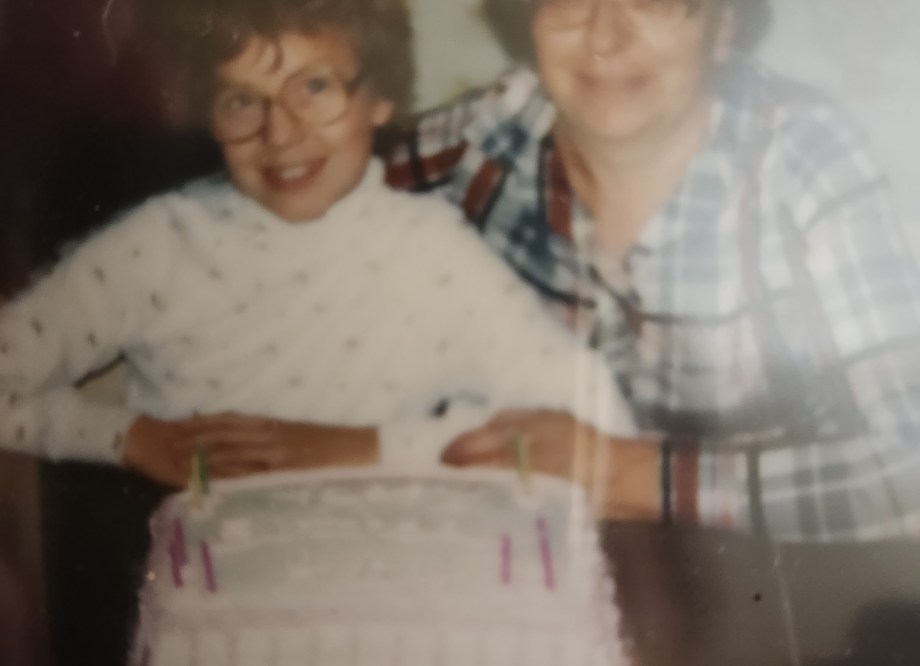
It all goes back to a refrigerator packed with salads, casseroles, and everything else to keep us alive and functioning. I was 12 years old. Mom was sick and she wasn’t going to get better. Family and friends came to visit and help care for her and watch me. When she went to the hospice the nurses used to make sure the fridge was stocked with pudding pops just for me. There were none there the day she died. Dad and I went home to a fridge packed with food that kept coming and coming.

I remember the day of her funeral. I ate 13 ham sandwiches plus who knows what else. I couldn’t fill the hole. We went home again to that fridge filled with casseroles and salads and leftover funeral food. It was too much. I couldn’t even look at it all. I just went to my standbys. I ate frozen pizza, chips, pretzels, and Franco-American spaghetti-o’s and ravioli. Nothing worked. Nothing filled the hole.

Dad saw it happening. He saw all the food in the fridge that friends and family brought us and he saw the garbage I was eating. He knew it wasn’t okay. He knew something was wrong and that he had to do something. It was the 1980’s and he was a middle-aged man picking up the spatula. He did his best to be sure that my brother and I had good food to eat. I tried to eat what he cooked. Fresh and homemade it didn’t fill the hole any better than my junk food disaster.

The hole kept growing. By my late teens I was feeling truly lost. I came to a point when my body and soul were so broken that I couldn’t take it in anymore. I literally couldn’t swallow. It wasn’t that I wanted to lose weight or didn’t want to eat. I couldn’t. I couldn’t swallow anymore. It hurt. So, I stopped.

Lot’s changed over the years. I’ve done a lot of work to address the sorrow of losing my mom and to see myself in a better and clearer light. I never did get that eating disorder diagnosis, but I still understand that hole and still question that relationship.

I’ve used a low-glycemic diet for the last several years to help address my epilepsy. I decided a few months ago that it was time to end the diet. Tonight, as I wander into the new year, I’m asking myself “how do I go forward?” My whole life food has been both a hideaway and a control tool. That little girl eating 13 ham sandwiches to hide from the pain of death or the me today that weighs myself at least once a day usually twice. I’ve been able to use counting carbs as a tool to fight epilepsy. I don’t know that it helped me, but I kept trying because I can count my carbs and I lost nearly 60lbs from a once obese state to a “healthy” weight. I could be in control. I could never fill the hole with food, but I could control it, but that depends on maintaining control. I find myself asking, “who’s in control here, me or the food that I eat or don’t eat?”

I’m asking myself tonight if it’s okay to order a pizza. I’ve been asking myself that same question all afternoon. It shouldn’t be that hard of a question to consider, but yet all the ups and downs of my dietary life leave me wondering if a pizza will leave me ill or destroy me or if it’s something that is just simply okay, something I can do and enjoy.

This has been a bit of mess of a piece to write, but at least it’s out. Maybe I’ll be able to create something more clear and well written in the future, but this is the mess I feel in the moment.

Three Months In, What Have I Learned?

I read Gretchin Rubin’s bood “The Happiness Project” last fall and it inspired me to start my own happiness project in 2025. As we move into spring, I’m proud to say that its still going strong.

In January, I started the project by dedicating 15 minutes a day to creative time, 15 minutes to meditation, and 15 minutes to stretching using Qi Gong, yoga, or other similar exercises to open mind, body, and spirit. What I’ve learned is that it’s okay to sometimes skip a day to not let these gifts become a chore. It’s important that each is seen as a gift and celebration in and of my life in order for me to stay committed and keep growing with them. Now, after just over three months I feel steady starting each day with my meditation time and ending each day with creative time and a brief stretch before settling into bed. These tools have become something to look forward to. I feel my body opening up and have seen that I’m calmer and slower to grow frustrated with the stressors in my life. It’s easier to work each day at school with those kids who are struggling in so many ways. I am really thankful for settling into these habits in this time of societal upset. I think they’re a big part of keeping my balance.

In February, I added a new goal. I decided I’d been watching too much tv so I opted for two days a week without any. Some weeks I succeeded and some I didn’t. What I learned though was that operating from a perspective of denial made me grumpy with myself and I didn’t like it. I found myself questioning- why am I doing this? It wasn’t something I could look forward to.

As we move into April, my goals are changing. I’ve decided that meditation, stretching, and creative time are settling in as habits. I can move forward with these. Denying myself tv time on its own just doesn’t feel good, so I’m letting it go though I expect that my new goals may just help me cut my tv time from a more positive perspective. I’ve opted to add in three new goals. For the next three months or so, I’ll be working on getting out to spend additional time playing outside in natural areas hiking, boating, biking or otherwise just being at least twice a month, making music at least two ours a week, and reading for pleasure at least 15 minutes a day.

So far my new goals have been going great. Walking along Lake Mendota with my dog yesterday was fantastic. I love the water! Revisiting the “Chronicles of Narnia” which I read in my youth has been lots of fun as has listening to “The Hobbit” which perhaps surprisingly I’ve never read before though I saw the movie. My dog has handled me getting out my old flute very well and getting together with friends for a weekly singing circle always brings a smile to my face.

It all reminds me how important balance is. I know I am a person who so easily gets sucked up by my work and needs to be intentional. Happiness 2025 is really helping.

What are you doing to find and maintain your joy?

My Own Happiness Project for 2025

I was struck by the idea of building on our happiness in such an intentional, step by step process and decided that with the new year coming it made sense to take it on myself. So, I got myself a wellness planner, started to think through my first areas of focus, and here I am getting started. I hope you’ll travel with me.

All in My Head– A Story of Adult Onset Epilepsy

It’s been some time since I’ve written in my blog. It seems time to start again, but it’s a challenge to decide where to start to pick up the speed and reengage followers. So, I’m pulling out a few old pieces that I’ve written, but maybe never posted. Here’s where we begin, with a story from three years ago……..

The bed was surrounded when I awoke.  They looked kind and seemed concerned, not angry.  Still, it’s a bit disturbing to wake up and find one’s bed surrounded by people in uniform.  The good looking fellow standing by my head began asking me questions.  What was my name?  Who was president? What day was it?  Even in my confused state I saw this fellow was quite attractive and I felt I should make a good impression.  I tried my best for witty answers, but the words wouldn’t quite form.  All I could manage was a garble.  It was as if my brain and mouth weren’t fully connected.  Nothing was quite making sense.  Where was I?  Who were these people and why were they here? Why did everything feel so unreal?

My new roommate, Jane, had just moved in a few days before.  We’d been acquaintances for a while, traveled in similar circles, but it was only now that we were starting to get to know each other in any real way.  We’d just spent a nice evening visiting, swapping stories, and talking about what was important to each of us when sharing a house.  At the end of a pleasant visit, I went to bed just like any other night.  A few minutes later Jane began to hear noises from my room.  It seemed strange, so Jane called out to ask if everything was okay.  When I didn’t respond she came to my room to find me groaning and twitching, foaming at the mouth.  I was having a seizure.  

The EMTs continued to ask questions and slowly my brain and body began to reconnect.  Eventually, they asked if I would be able to walk, with support, to the ambulance.  We lived on the second floor and carrying me down the narrow staircase was a challenge they wanted to avoid if possible.  I was sure that I could.  I got up leaning on my new helpers and wandered through the apartment I’d lived in for over a year and didn’t recognize.  Seeing Jane I thought to myself, “I wonder who that is? She looks nice.” 

I’d begun having headaches in my 20’s, some two decades earlier.  I’d wake up barely able to function.  The nausea and squeezing pain would simply be too much.  I couldn’t eat.  Looking at a computer screen or television would be out of the question.  My mind couldn’t focus to allow me to read or do much else.  So, on those days all I could do was to call in sick, go back to bed, and sleep the day away.  The headaches would take all my energy.  I’d sometimes sleep the whole day only to sleep all night too.  It would take a few days before my energy would return.  My head and stomach would ache for sometimes a full week without reprieve. 

Since I was incapable of doing much of anything on days with headaches and just wanted to hide away from all humanity, it was impossible to see a doctor during an event.  The headache events didn’t happen often, usually only every few months, but as the years went by they became more frequent probably as much as monthly.  I needed an answer.  I read. I watched videos and documentaries.  I studied everything that I could find.  I went to doctors, but could only visit when I felt well and this did me no good.  They listened to my stories, ran tests, and found no answers.  I took to calling my headaches migraines and just hoping they’d stop some day.  

That first observed seizure took me to the ER and started my long and varied relationship with neurologists.  It didn’t give me a confirmed diagnosis of epilepsy at least not on its own.  It did, however, give me a good idea of what my headaches over the past twenty years really were. It also concerned the neurologist who saw me enough to encourage me to start taking medication.  

Dry mouth, heartburn, nausea, bone loss, weight gain, weight loss, memory loss, trouble with words, difficulty walking, irregular heartbeat, loss of consciousness, aggression, seizures, depression, and on and on.  This is just a partial list of the side effects to most anticonvulsants.  Typically, once a person begins taking anticonvulsants they are on a lifetime journey of taking them.  Seizures are an invisible disability that can be controlled, but has no promise of being cured.  

One seizure, that couldn’t mean that I needed to embark on a lifetime of these side effects could it? It seemed that the treatment could be far worse than the disability itself.  How could all these horrible things be considered getting well?  I wasn’t ready to go down that path.  I had to find another answer.  There had to be another choice.  

Diet changes, meditation, essential oils, supplements, massage, exercise, acupuncture.  I kept reading. I kept researching. I dabbled in everything I could find.  A lot of things helped, nothing was the answer.  I still shook and not only did I shake, I stepped out of myself.  Seizures aren’t just the ones that we see in the movies where people fall to the floor and thrash about.  There are at least six different types of seizures.  It would be rare for me to have a tonic-clonic seizure that the media has made so popular.   

Instead one day when I was walking the dog, suddenly everything went dark.  I couldn’t see where I was. I heard something in my head. Was it voices?  Was it just sounds?  I don’t know, but I was in another world for just that moment.  I knew where I was in this world.  I knew where to put my feet as I walked.  I didn’t stumble.  I didn’t fall.  But, I was in another world too. I had seized.  This was to become a part of my new normal.  

Months passed.  I was unemployed. My job of nearly a decade had ended when the organization closed.  My options for healthcare were limited with state health insurance that covered very little and left me with medical bills that I couldn’t pay.  Still, I kept doing whatever I could, getting acupuncture or seeing a chiropractor when I could afford it, trying to eat well, take supplements, meditate, exercise, and whatever else I could.  Things didn’t seem to be getting any worse, but there didn’t seem to be any improvement either.  

Then came Christmas. I was visiting family when the seizure came.  It was the first, and as far as I know, only time I ever had a full fledged tonic-clonic seizure during my waking hours.  I didn’t know it, but apparently my body knew something was coming.  Moments before the seizure started I slipped out of the chair where I had been sitting and moved to the floor to sit.  I woke up in the ER again.  This time I woke to find my older brother with a look on his face that I hadn’t seen in more than twenty years.  The last time I had seen that look of sorrow and fear was the day our mother died.  When my consciousness returned he told me how my seizure scared him, how he thought that I was about to die.  He pleaded with me to promise that I would work with my neurologist and take medication.  I couldn’t break his heart.  I made the promise.  

Two-thirds of the people with epilepsy can be successfully treated with anticonvulsants.  The likelihood of success falls with each drug tried.  By the time the patient reaches their fourth medication the likelihood of success is two to three percent.  I’m on medication number four right now.  

I’d never had an allergic reaction to a medication in my life.  That was until my neurologists and I started trying to treat my epilepsy.  The first three medications gave me rashes, made me quiver, just generally made life awful.  Medication number four wasn’t much better, but didn’t actually cause anything that fit within the realm of an allergic reaction.  Still for years I lost words, found myself unable to count on my memory, grew frustrated and depressed with my inability to write anymore, my inability to remember names, my loss of my former self.  Perhaps the saddest was the day I had to give up acting.  I’d found so much joy in community theatre, but I could no longer remember my lines.  I had to set it down.  

It’s been about seven years now since Jane saw that seizure.  Epilepsy is still a huge part of my life.  It impacts my every day in challenging ways and in good ways too.  

There have been several times that I’ve had to give up driving.  The laws around driving with epilepsy are different in every state.  Some people choose not to ever drive again.  Some of us return to driving when we are able.  For myself, giving up my car opened the door to friendships as I depend on people to help me to get where I need to go.  It encouraged me to take time for myself, enjoying being outdoors and celebrating my neighborhood as I walk most everywhere that I need to go in my small town.  

Four years ago I started to make truly healthy food choices.  I began with giving up caffeine on the advice of my neurologist.  Before then I had been a big fan of coke products, drinking at least one or two every day. Cutting caffeine cleared my head in a way that I’ve never looked back on. But three years ago was the really big leap. I’d reconnected with an old friend who works in holistic medicine and opted to have my food allergies tested. The test revealed nine foods that cause mild allergic reactions for me.  On the top of that list was cane sugar.  For three years now, I’ve done my best to eliminate my allergens.  Sometimes I fail, but most of the time I succeed.  I’ve lost over forty pounds and gained a new energy.  I’ve learned to limit the processed foods in my diet and to cook real food.  

I don’t like taking medication.  I wish sometimes that I didn’t need to, but until a cure for epilepsy is found I have a disability and I need to use the tools available to me to control it and live my best life possible.  Exercise, meditation, keeping a balance of life and work, finding joy in each day, eating well, celebrating my circle of support, and just treating myself with all the kindness and care that I deserve.  

I’ve learned a lot from these seven years now that I have been able to count myself among those with a disability, but perhaps most importantly I have learned  to study, read, watch documentaries, ask questions. Do everything that you can to learn about the health challenges and disabilities you face, but at the core the most important thing, the thing that will keep you alive, that will keep you going is to just simply recognize yourself as someone who is still worth your own respect, still worth your own caring, still worth your own love.  Our disabilities impact our lives.  They can have an impact daily.  But, they do not define who we are or our level of worthiness.  That’s what moves me forward, to know what is in my brain isn’t in my heart and soul. 

The First Week Going MAD

Tuesday marked the end of my first week on the Modified Atkins Diet for my epilepsy. It’s far too soon to know if the MAD has impacted my seizures at all, but I can say that I have seen some changes and have learned a bit too in this past week.

Before I started this journey I created a list of “MAD Hopes”, 25 hopes and goals that would help me know if I am succeeding or not. These hopes and goals include things related to my epilepsy like seizure freedom and decreasing medication as well as other things related to my overall physical, emotional, and spiritual health. Reviewing my list this morning I can say that I am doing well. I am five pounds closer to my goal weight. I don’t have the bloating that I did before I started. My breathing is better and my athlete’s foot is clearing up. I think I may be starting to sleep a little better. I definitely feel good about my food choices and how they impact the planet and myself. Thus far, the MAD is doing good for me.

It’s not been a perfect trip so far. Each day I check my ketone levels at least once using a urine testing kit. Each day now it seem my ketone levels show up high on the scale. Some days this is not a big deal. Other days it comes with a bit of fatigue and maybe some nausea and stomach discomfort. These are signs of low blood sugar and could indicate significant problems coming. Thankfully, a great lesson I’ve learned this week is one that many people with diabetes have known for years– the amazing healing powers of apple juice. Two tablespoons of juice and I am back within normal ketone levels and fully operational. I am told that my body will likely adjust, my ketones will come into balance, and I won’t be needing apple juice regularly any more.

I’d like to say that the new diet has increased my energy and clarity, but it’s hard to say. My life has been a bit unusual having had a few weeks off looking for my next place of employment. It’s meant a lot more time sitting and typing and hanging out with the dog, not a time that requires a great deal of energy or quick thinking. With luck and some work I will be back in the workplace soon, then we’ll see how the MAD has impacted my clarity and energy. Meanwhile, I am happy with what I am seeing.