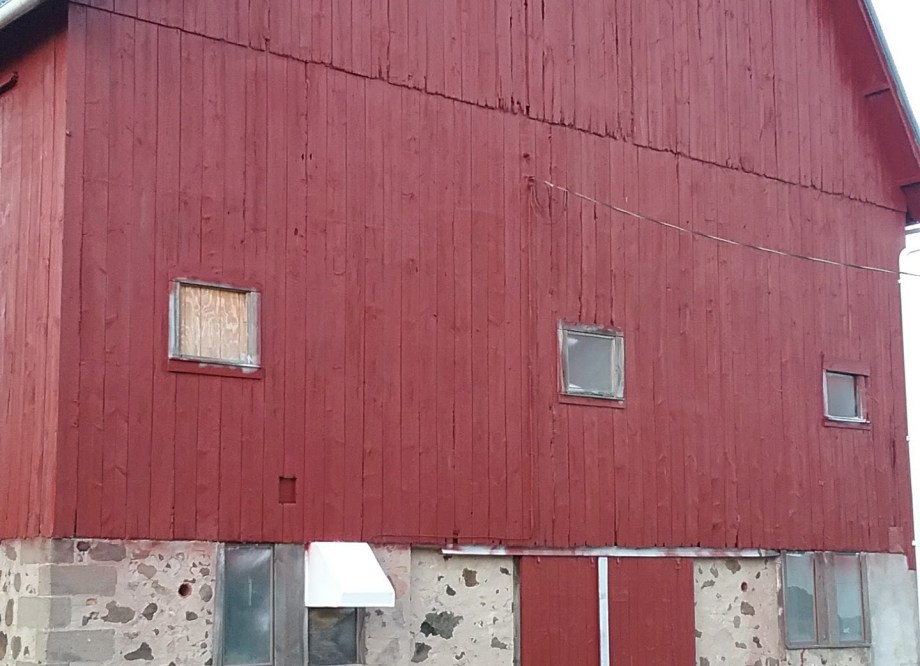
I’m a middle-aged city dweller who hasn’t lived on a farm for more than just a few weeks at a time since leaving home for college in 1990, other than in a rental house that just happened to be on a farm that I wasn’t involved in during the early 2000’s. Yet, I continued to identify myself as a farmer’s daughter. I continue to volunteer for Family Farm Defenders even though my current food growing is confined to pots on the balcony of my apartment. Why? Why continue to care? Many reasons.
Lake Mendota, the most studied lakes in the world, is just a block from my apartment. Lake Mendota is part of the Yahara chain of lakes. 80-90% of the phosphorus entering this chain of lakes comes from agricultural run-off. That phosporus feeds algae growth in the lake resulting in a massive expansion of blue-green algae that makes the lake unswimable for much of the summer in many areas because of the toxicity of the plant.
Now, what is agriculture doing that is causing this. Well, let’s start by correcting a piece here. Agriculture isn’t the problem, agribusiness is. Agriculture is what I grew up with, those small family farms that often were generations old. As I see it, agriculture depends on an understanding of and connection to the land one farms. It depends on farmers who understand that their actions have consequences that will impact them, their families, their communities, and future generations. They recognize that both the animals and the land they care for must be respected and cared for in thoughtful ways if those creatures and that place are to be able to sustain the farm and the farmer.
Agribusiness forces the farmer to let go of their knowledge of place and to ultimately deny their connections with that place and with the creatures there. Thus we’ve got acres upon acres of soybeans and corn, much of which is not meant for human consumption, being covered in pesticides. This makes it possible to build the massive dairy farms that we see today. We have roughly 5,115 dairy farms in Wisconsin as of January 2026. The average dairy farm in Wisconsin today has about 233 cows. Many of the large corporate farms have thousands of cows. The largest that I am aware of is milking 13,000.
This is a huge change from where we were back in 1950 with 143,000 dairy farms and over 2 million cows. Those were smaller farms spread out across the state with cattle more dependent on grazing rather than being confined. With cows spread out across the state manure is spread out and was used as part of farming. Now, we have gigantic pits of poop, cattle eating far more grain than is meant for their ruminant systems to fatten them, and antibiotics being used to keep them from dying in confined conditions. That manure, the pesticides being used on those huge fields of grains, and those antibiotics are winding up somewhere. That somewhere is places like Lake Mendota and the more than 15,000 other lakes in the state. From there it winds up in us. I don’t know about you, but the thought of pesticides and the remants of medications used on farm animals and their manure in my system makes me a bit ill just to think about.
Not only all this, but we are losing farms and farmers who are the backbone of what is actually agriculture. Wisconsin lost 233 dairy farms in 2025. That was better than some recent years. In 2019 the number was 818 nearly 11% of our dairy farms were gone. Between 2004 and 2024 at least 275 farmers in Wisconsin died by suicide. Nationally, agricultural workers have a suicide rate that is 3.5 times higher than the general population.
I think about all this and I remember being a little girl on the farm watching out the kitchen window as our neighbor’s barn burnt to the ground. I think about my father, about him and my mom and all the other farmers that surrounded me growing up in rural Wisconsin, so many who lost their farms or who recognized that there was no future for them in farming anymore and let those generations old homesteads go. I see no other option but to keep fighting, so that we all might eat clean food, breathe clean air, and drink clean water again.
 Sustainable Life In Action
Hi,
Thanks for your post. It’s a global problem all around the world, we have the same issues in France and Norway. But, are we ready to rethink our consumption habits: eating less animal protein, supporting local and small-scale farming, enabling these farmers to earn a decent living from their work, etc.? I’m curious to know how you’re fighting back. What actions are you taking? For me, the most impactful action is how I spend my money when I buy food. Thank you for your thoughts.
LikeLike
There’s so much we can do! I think that what you suggested about supporting local and small scale farmers is right on target. It’s also helpful to be a part of or support organizations working on these issues. For me right now that means being active with Family Farm Defenders. I’ve gotten to help out in so many ways, teaching people about water pollution, flipping grilled cheese sandwiches at fundraising events, and even dressing up as a cow and standing in solidarity with striking Starbucks workers. There are great groups out there. I used to also be the director of Toxic Taters, a small grass-roots organization in Minnesota that worked with the Pesticide Action Network and did everything from lobbying legislators to coordinating a national day of action against McDonald’s. Just ask yourself what you’re willing to do and chances are someone is out there who is willing to work with you. We can do it!
LikeLike
Hi,
Thanks. I will find a way to be more activ.
LikeLike
Fabulous! Thank you for taking the action that works for you!
LikeLike