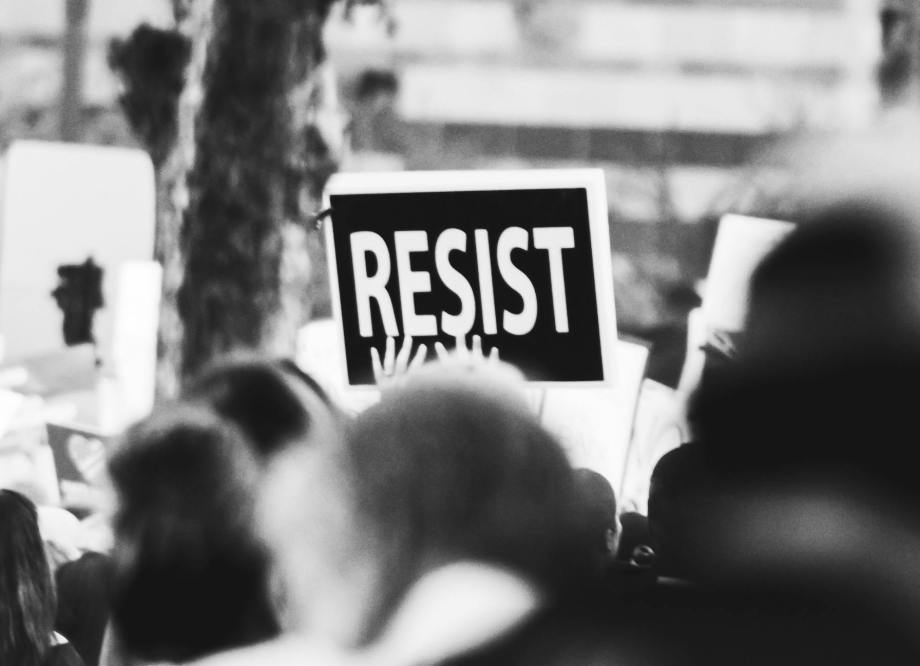
The protests of today are something new and different and at the same time are as old as, well I don’t know what, but they are old, generations and generations old.
I feel I need to speak to this because I wonder if we know our history and how that knowledge or lack of knowledge impacts our ability to act and to make positive change? What I speak of here is largely about the history of this place we call Wisconsin, because it’s my home and the place that I know most well but I suspect similar stories may exist in other places as well.
I had a conversation yesterday with a friend who’s been involved in some of the growing work around non-violence trainings. She and I had both been central in coordinating the non-violence training work that happened in 2011 when thousands of Wisconsinites and our allies took over our state capital in an effort to defend collective bargaining and public workers.
She told me about the new trainings that are coming together and their use of the stories of the lunch counters during the Civil Rights Movement as a training tool. These stories are powerful and excellent training tools, but thinking on it further I wonder if we make them into something imaginary by only using these stories, by knowing only a small bit about these them and nothing about what they inspired. Let me just share some short clips of what has happened here in the last few decades in hopes that it may inspire someone to seek out the elders and to ask questions so that we might all know more of who we are and where we come from.
The Dow Chemical Protests 1967 UW Madison: This was a point of major change in student protests during the Vietnam War. On October 18th, 1967 students gathered in the Commerce Building (now Ingraham Hall) to protest the Dow Chemical Company and their role in the war. Police began making arrests. Students refused to leaving and the police began to club them and, for the first time, used tear gas on the crowd. This action is credited to have politized many more and helped lead Madison to the forefront of the Peace Movement.
August 1967- April 1968 Milwaukee: After the Milwaukee Common Council refused to pass an open housing ordinance, people marched for 200 consecutive nights facing violent opposition, but ultimately reaching a major victory in the passage of the Federal Fair Housing Act on April 11th 1968.
1969 UW Madison: After three years of organizing and following a similar effort of Black students several months earlier at UW Oshkosh that led to the arrest and suspension of the UWO students, a group of Black students brought a list of 13 demands to the chancellor on February 7th, promising if their demands were not met they would boycott classes on February 10th. On the first day of the boycott 3,000 students demonstrated in support of the demands. On February 12th the National Guard was called out to respond to the ongoing strike. On February 13th up to 10,000 people marched on the capitol. Many weeks and many meetings later the strike was over. Not all was won, but the UW did have a new Afro-American Studies department, a renewed commitment to recruit students and faculty of color, and a strengthened Afro-American & Race Relations Center with a full time director.
1970’s Durand: Activism hasn’t just been happening in the larger cities in Wisconsin. Our rural communities are strong fighters too. Take the case of the Tyrone Energy Park nuclear plant that was proposed near Durand. Farmers and other residents of the area, concerned about the environmental impacts, safety, loss of farmland, and the condemnation of the lands on which they lived fought back and ultimately stopped the project.
Menominee Land Rights 1972: Faced with the poverty caused by the termination of their tribal status, loss of land, and destruction of forests, hundreds of Menominee marched from Keshena to Madison. The march, along with intensive organizing, lobbying, and long work led to greater control of land sales and restoration of tribal status, and ultimately forest preservation.
Northern Wisconsin 1983: This time marked the beginning of what would become known as the “Walleye Wars.” The 1983 Voigt decision recognized in the courts that the Ojibwe people have the right to hunt, fish, and gather on ceded lands and ultimately empowered tribes to manage resources and led to the creation of the Great Lakes Indian Fish and Wildlife Commission. Immediately, however, the decision also however led to war in the northwoods. It was misinterpreted by many non-Natives who thought Indians were being given “special rights” and led to violent protests at the boat landings which threatened the lives of many Native people. It also led to the creation of the Witness for Non-Violence and Midwest Treaty Network, bringing together Native and non-Native people. By the early 1990’s with the work of non-violent response to the violence at the boat landings, large government issued fines for those threatening Native fishers, additional judicial decisions, and studies of the impact of Native fishing, the violence at the landings dispersed and new connections between Native and non-Native people continued to grow as the work moved on to fighting proposed mines.
There is much more to say about the history of Wisconsin and non-violent protest. I’ve not even begun to address labor, the lgbtq community, women’s rights, disability rights, or so much more, not mention I’ve only just gotten into the 1990’s and we’ve been continuing to work in so many arenas since that time thirty some years ago. The point though simply is; the actions we’re taking now while different and growing, aren’t something new. We are building on the shoulders of those who have gone before us. Many elders have walked on, but there are still many among us who were a part of all these actions and maybe are still part of these rallies and protests today. Hear their stories, learn from them, honor them.
 Sustainable Life In Action
My name is Art Shegonee, I & my wife Dawn are artists, activists & were at the boat landings with Nick Hockings in1989, during the Fishing & Treaty Rights days. Nick lived on the Lac du Flambeau Reservation, & his house was on the lake. Dawn would like to send you a 8 min U-Tube
Of A Film Production that Nick Dawn & Myself created, that meets the current times we are facing, that you may want to share. with others. I opened the “No Kings Rally” at the WI State Capital on October 28, 2025 with about 20,000 people. Please call Dawn & and also …send your e-mail back to us. 608-469-8572 Many Thanks!
LikeLike
Hi Art– I listened to you at the capitol. Would love to see the video. I’ll give you a call.
LikeLike
Hi Amy Just sent a comment & info, & question, to your asking for comment Comment, Native Art Shegonee
LikeLike