Tag: activist

Do You Have Experience? An Organizer’s Moment to Laugh

I was encouraged a month or so ago to run for the board of WORT 89.9fm, a community radio station that’s called Madison, Wisconsin home for fifty years now. I served on the board before, from 2011 to 2014, but after some thought decided I’d be willing to serve again. With that, I began the process of filling out the application for a listener/sponsor seat on the board and arranging with Nate, the news director, my opportunity to be interviewed to share my experience and thoughts on WORT’s future. I was looking at the proposed questions earlier today and it got me thinking.

One of the questions on the list is– Do you have experience serving on a non-profit board, or in another leadership role? It made me laugh. I’m a 54 year old organizer, activist, educator. Where do I begin with a question like that? It made sense twenty-five or thirty years ago for me, but today there’s so much history to share and not the time in any quick radio interview to do it. It reminded me too of friends encouraging me some years ago to share more of my history and maybe write my memoir or autobiography of my life as an activist/organizer/educator. Well, this isn’t a book, but it seemed a good time to share a few of my favorite experiences along the way. I hope that readers of this blog will ask questions, share their experience and use the things I’ve done to build their own dreams.

I began to really become conscious of the problems in the world as a student at UW-Stevens Point in the early 1990’s. This farm girl was suddenly in a bigger world and it became clear that life wasn’t fair. Early on I became the Gender Issues Director for the Student Government Association. I began to see the extent of the problems being faced by women like myself on campus, how many were being raped, feeling unsafe, and dealing with discrimination at work and in the classroom. I also got to work alongside the Multicultural Issues Director. My eyes began to open to issues faced by students of Color, people with disabilities, and members of the LGBTQ community. Racism, sexism, hetero-sexism, and ableism where all there. Once my eyes were opened there was no closing them again.

I got involved with lots of groups and organizing efforts on campus, across campuses, and with the larger community. Environmental Council was one of the first. Each spring break we’d walk roughly 200 miles from Stevens Point to Glen Haven, Wisconsin raising funds for raptor rehabilitation through the Eagle Walk. Walking those miles, meeting people, and just seeing Wisconsin in a different, slower way helped me get grounded in the struggle. I began to understand the place I call home in a different way.

I was also a part of the anti-corporate, pro-democracy movement of the time. A small group of students were beginning to come together from across the country and we were organizing Democracy Teach-Ins at local, state, and national levels. Again, my eyes were being opened. I was learning about the impact of how we live on our ability to continue to exist for generations to come. I was seeing other options for my own life as well as for all of us as a society.

Around this time I joined in the struggle against the proposed Crandon Mine, a state-wide struggle that brought together Natives and non-Natives, students, workers, sportfishers, and so many others. It connected me with many mentors, most notably a number of Native people including Walt Bresette and Andy Gokee. They helped me see the world in a way that made so much more sense. They taught me about the idea of the seventh generation, that concept that we aren’t just acting for today, but for those coming seven generations from now. It’s thinking and acting like this that makes it possible for us to protect the earth and ourselves.

During this time, I worked with Walt and a crew of other Native and non-Native folks to organize the Protect the Earth Walk. We started on the shores of Lake Superior on the Red Cliff Reservation and walked over 300 miles to Madison. We walked and talked with folks along the way and learned so much as we educated and did our best to engage people in protecting the earth.

In the midst of that walk I took a break to go to Tennessee where I interviewed to work for Save Our Cumberland Mountains, SOCM. I got the position and it began my life as a professional organizer/activist. While with SOCM I had the great honor of being the organizer for an amazing team called the stripmining issues committee. Because of their amazing knowledge and commitment as well as our work together building a mass movement, we were able to win a years long fight and protect more than 62,000 acres around Fall Creek Falls State Park from mining.

While with SOCM, I also got to work with some amazing people working to stop clearcutting and learn under the guidance of media guru, Jane Wholey, as she led SOCM’s media work during a fantastic campaign which included bringing in reporters from around the state, flying them over clearcuts, and hosting a large event on a clearcut. We changed media’s understanding of the issue and made some major pushes toward positive legislation in Nashville.

After a few years, I came back to Wisconsin where the Crandon Mine fight was continuing. I got involved again along with trying to start a Riverkeeper project in the Fox Valley with my friend Jeff. Jeff and I had a lot of great ideas and made some good connections, but we didn’t have the money or the skill at the time to build a nonprofit organization. We eventually moved on and I became the statewide organizer for the Wisconsin Green Party. This was during the height of the Greens in the US as Ralph Nader and Winona LaDuke were running for President and VP.

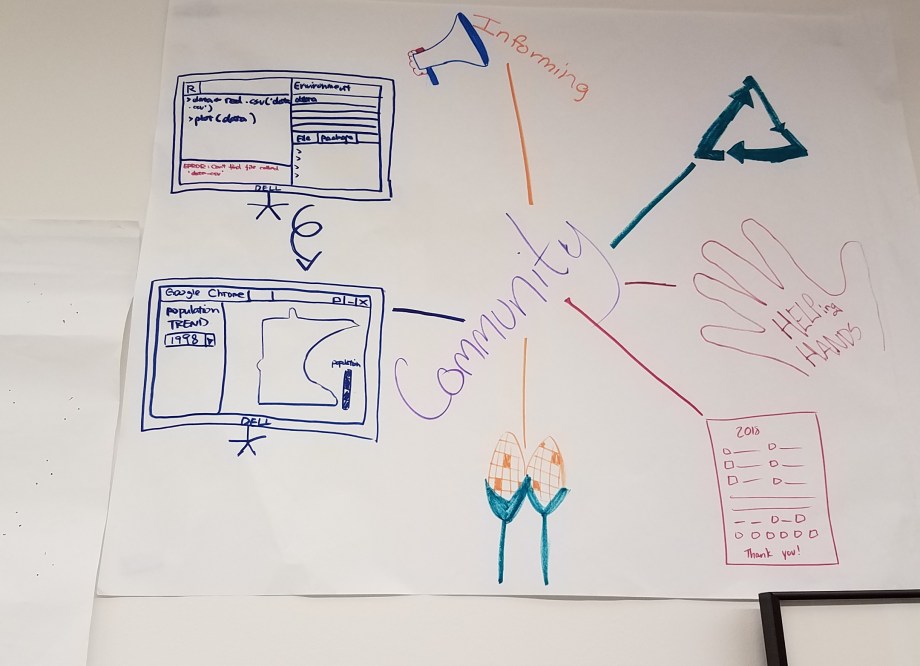
In 2003, I found my true love. I was hired to take on the coordinator role for a new organization in Madison called the Grassroots Leadership College. I worked for the GLC for its nine year life. The organization ran on the idea that everyone is a learner, everyone is a teacher, everyone is a leader. That idea still defines my life and work. Together we provided adult education in community organizing and leadership development to more than 500 people and supported the development of over 120 community projects, many of which are still active and impacting Madison, Wisconsin, and other places as well today.

As the GLC was nearing its end, politics was heating up with the Walker administration and Act 10 in the state capitol in 2011. My experience coordinating leadership and community organizing trainings for adults was well known. When the TAA became aware that their legislative action was going to be far more than they’d anticipated and that it was time to occupy the Wisconsin State Capitol, they also knew that they had to take action to keep the occupation non-violent. They called me for help. My friend Jeff and I organized the first non-violence training and within the upcoming days I was able to call on trainers that I knew and we quickly had a team of 25 people who created the Peaceful and Prepared flyers and trained thousands of people of the weeks in the capitol in the basics on non-violence and staying safe.

During this time I also volunteered with Labor Radio and served on the WORT 89.9fm board of directors, working on the personnel committee, as the board secretary, and affirmative action/ equal opportunities representative, among other volunteer efforts.

After the occupation of the capitol and the closure of the GLC in 2012, I was exhausted. I needed to get out of the highly political Madison and into a new place. By 2014 I left for Minnesota and the directorship of Toxic Taters. Toxic Taters is a small organization that was just starting as I took over the director role. It’s role is to address pesticide issues. We started big and it continues that way today. We took on RD Offutt (RDO) the largest potato grower in the world. During my time we began the days of action against McDonald’s that continue to happen nation-wide, as well taking legislative action to protect Minnesota waterways, people, and land within the impacted areas, and worked to stop expansion of RDO in Minnesota.

In 2017 I opted to follow another dream, to work at a university. I left Toxic Taters for the University of Minnesota- Morris. I worked at the Center for Small Towns coordinating internships across the state, including building new relationships with the tribes and connecting students with internship opportunities on the reservations until my position was discontinued in 2020.

When my position ended I came back to Wisconsin. First, I landed in Poynette where I took on the directorship of a new organization that was to be dedicated to mentoring youth, however, after finding out that several board leaders were using the organization to draw children into their church and prevent homosexuality, I left immediately. Thankfully, my friend Ben needed some help with his organization, The Memory Project. I was able to jump in to work with him while I figured out my next steps.

A seizure behind the wheel ended my time in Poynette. I needed to live in a community where I would have access to public transportation and be able to walk and bike since I was giving up my drivers license. I headed back to Madison.

Back in Madison, I briefly directed Solace Friends which was just launching at that time. I was and remain excited about the idea of the organization, to provide housing and support for terminally ill people who are homeless. However, it didn’t take long for me to discover that I’d never gotten over being worn out from my years as an activist/organizer/educator/nonprofit director. Trying to manage what would become the home for Solace Friends, do large amounts of fundraising and promotion, and guide the development of the organization was more than my body could handle. My seizures were impacting my every day again. I had to leave for my well-being.

In 2022 I was searching for my next work adventure and took on being a substitute special education assistant at Madison elementary schools. This led to my decision to become a special education teacher. I would eventually teach at Mendota Elementary for several years before deciding that the school district wasn’t the place for me despite my love for my students and all the great teachers and staff I worked with.

Now, I continue to teach. These days my role is working in early childhood education at Madison College’s Early Learning Center. I love it! I continue as an activist, helping out through Family Farm Defenders, occassionally getting to read for Labor Radio, and just showing up here and there at events and rallies. I also stay active just doing the work of creating community in fun ways like volunteering at the zoo and with Madison Community School and Recreation’s (MSCR) pontoon program, judging each year for History Day, writing this blog, working on my children’s book, and just helping out where I can.

What I’ve shared here is just some of the highlights. There is so much more that has made my life and taught me so much. It’s changing over time as life does. I welcome the stories of all my readers and encourage those of you who know me to add in the bits that you remember and that I missed!

Thank you to everyone who is doing your part to make our world and our communities healthy and sustainable for the generations to come.

Meeting the Moment and Inspirations To Act

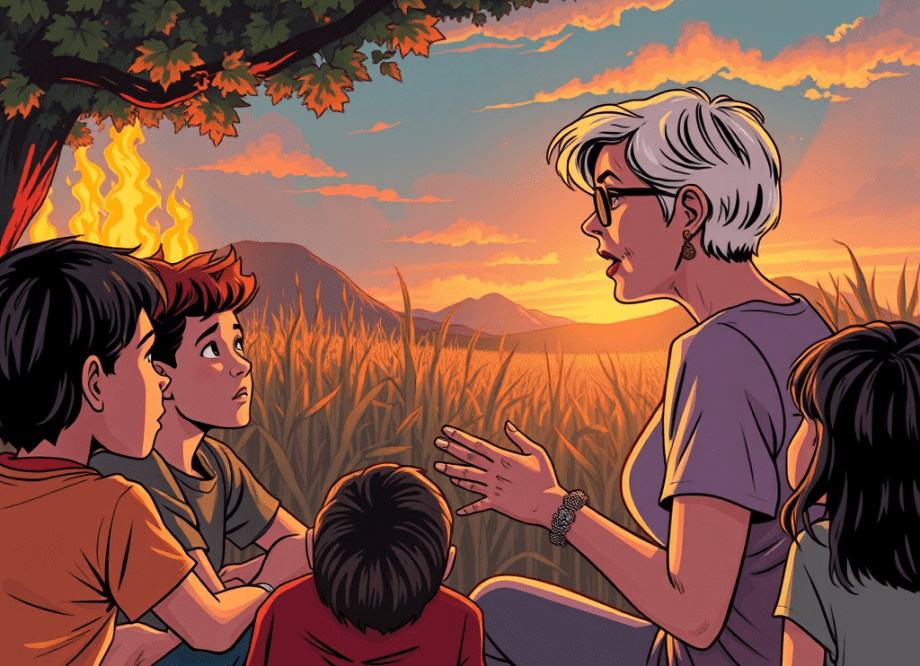
The author reflects on their journey as an activist, highlighting impactful moments and mentors. Memories of witnessing hardship in their community, including barn fires and cancer’s toll, shaped their passion for change. Influential figures, such as Walt Bresette and Frannie VanZile, inspired them to advocate for future generations and empower communities.

Protests Don’t Work

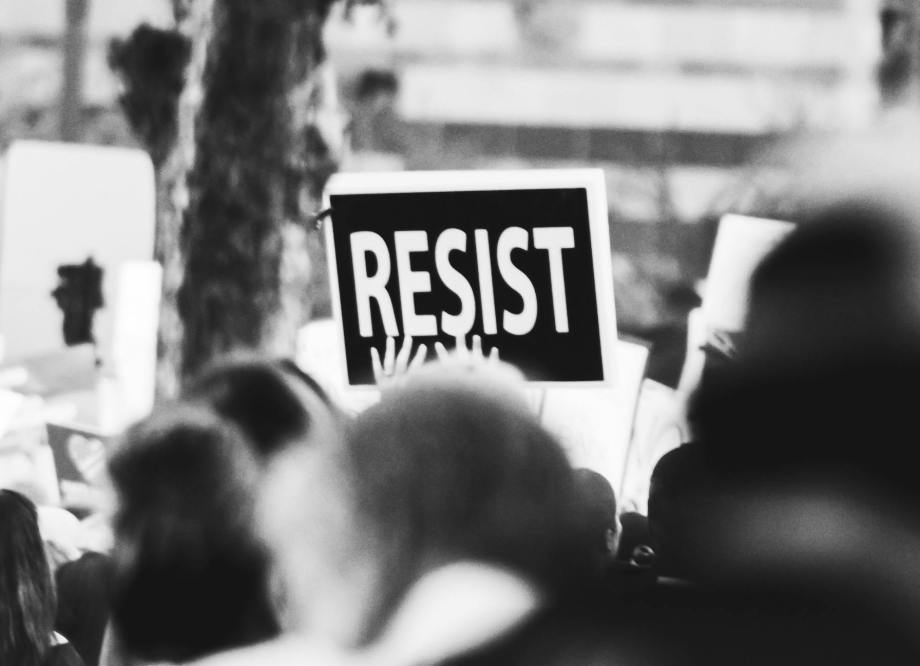
Protests don’t work. Yes, I’ve said it. I’ve been an activist for over 30 years, spending a whole lot of time shouting slogans and waving signs, but I’ve been known to say it and will say it again. Protests don’t work. But, let me go a little deeper here and share what’s inspired this post.

On August 18th, 1920 the 19th Amendment to the US Constitution was passed giving women in the US the right to vote. (We could get into the discussion of who exactly got the right to vote, but that’s another post for another time.) Historical societies and museums across the country are celebrating the 100th anniversary of this amazing victory right now with exhibits, documentaries, and educational events. Yesterday, a friend and I went to visit the Wisconsin Historical Museum in Madison to view their exhibit on suffrage. It was an excellent display and I would encourage anyone in the area to check it out.

As we wandered and viewed the images my friend questioned whether some of the tactics used by the suffragettes might provide lessons for organizers today. Could we use any of the same tools? She lamented that protests and rallies no longer work because of the fact that we live in a world of social media in which messages move so quickly and can so easily be modified. I proposed that protests have never worked and never will, at least not on their own.

Protests are only a tool. It is the actions between the protests and behind the scenes that make the work successful or not. Protesting remains important, if well used. It is a tool that can draw public attention and influence decision makers. However, it is important not to expect that protesting on its own is going to bring change. A large portion of the museum display was dedicated to the banners, signs, buttons, sashes, and tunics worn and used during fight for the vote and later fight for the ERA. This makes sense as they are very visual pieces of history. Still, it only shows us the highlights of what was really a much more complex history.

In the 1820’s, one hundred years before the amendment was to pass, white men had gained the right to vote in most states and discussions had begun about this right for women. By 1948, the movement solidified through the Seneca Falls convention. For nearly one hundred years women met, discussed, strategized, argued. They built partnerships and alliances. They wrote letters, created newspapers, handed out pamphlets, spoke to handfuls and to huge crowds of people. They coordinated conferences. Women, and some men, committed their lives to this issue of justice. Some would never see the results of their work as they would die before the passage of the amendment.

We cannot fool ourselves into thinking that social change is some sort of fast food where we head up to the capitol or wherever to protest and come home with our win. There is much more. The struggles are long and hard, but the victories and the loves found along the way are well worth it. Take good care of yourselves my friends and keep on moving forward.

What is an Activist

When I began Sustainable Life in Action back in 2013 the Grassroots Leadership College had only been closed for a year and I was trying to find enough work to keep my rent paid and figuring out how to keep doing community organizing. My dreams were of starting a new Grassroots Leadership College maybe statewide or maybe in northern Wisconsin along the shores of Lake Superior. It wasn’t too much later that I left Madison. Life didn’t take me to northern Wisconsin, but to Minnesota.

In those days, for me, being an activist still meant organizing people, coordinating trainings, taking part in protests, speaking at rallies, being a force, and fighting out loud in a non-violent yet intense way. While my work was for a better world most of my actions still landed in the realm of working against the evils. I loved my work. I loved getting to know people, making connections, supporting others in achieving their dreams, creating positive social change. We did create change. Every time we people connected and came to know each other, to see each other as valuable human beings we were creating change, not to mention all the battles won.

Despite my love for my life work I was burning out. That’s why I started Sustainable Life in Action. It was a tool to encourage my own self care as well as to support others in caring for themselves. It has been a helpful tool for me. I hope it has been for others as well.

My journey as an activist has reached a new stage. It is an interesting one for me. After seven years in Minnesota and one in Poynette, Wisconsin, I have returned to Madison where Sustainable Life in Action began. When I left this place I was deeply involved in the activist scene. My name was known for work I’d done, nine years running the Grassroots Leadership College, coordinating the non-violence trainings for the capitol take-over during the Walker administration, Green Party stuff, Labor Radio and board leadership at WORT 89.9fm, and more. Now, I am coming back in quietly to a place where there are many new leaders and much of the old guard seems to have disappeared or maybe just is quiet in these times of COVID. It is coming back to a place where I’ve never been before.

It’s good to stand and watch this new place as I too am in a new place internally. After looking for jobs in the nonprofit realm and at the university and colleges to no avail, feeling my stomach churn a bit as I considered roles in organizing again, I decided to go back to another of my earlier careers. I accepted a position as an infant/toddler teacher in a large local child care. I’ve been intrigued by the reaction of old friends who seem to believe that going into teaching early childhood is leaving the world of activism. These people tell me how I’ve “done my time” and that it’s okay for me to do something else.

How can there be anything that is more about social justice than caring for our children? Being an activist isn’t all about holding up signs and shouting slogans. Being an activist is about how we live our lives. At this phase of my being, much of my time will be dedicated to holding the little ones and showing them love. I’ve also chosen to commit my time to being creative, telling my stories, and playing with art. All these things are important. I haven’t done my time, none of us has. We all have a duty to care for this place and for each other each day for the remainder of our time. How we do it is up to us.

Take good care of yourselves. That’s where it all begins.

Burnout Politics

I’ve been an activist and organizer for a long time. I used to say my whole adult life, but I suspect it actually started before that. The first formal action I took part in was in high school. Funding was being cut in our industrial arts and music programs. Almost the whole school walked out. A few kids whose religious beliefs didn’t allow such protest were the only ones left inside.

I’ve had the good fortune to fight the good fight in many ways and many places and to count some good wins along the way. I’ve had some good mentors and made some good friends.

I used to be really involved in political organizing. I was one of the leaders of our local Green Party. I co-chaired the state party. I helped start the national diversity committee. I worked on political campaigns. I facilitated meetings. I did it all and I loved it and believed in it.

But then, I got burned out. I was deep in depression and lost on what to do. I had to walk away.

After years of working on the front lines taking on major corporations, working on campaigns from school board to president it wasn’t the work that beat me down. It wasn’t the losses or some sort of evil conservative whatever. It was my own community, those who see themselves as liberal, or progressive, or even radical who wore me down and forced me to back away. They forced some great and strong people away and the movements struggled.

I share this now because I see the same things happening today. I hear the rantings about Republicans, the self-righteous talk of the evils of conservatism and I know some of the best folks I’ve ever learned from and walked beside would call themselves conservative or Republican. I know these folks as people who’ve worked hard caring for families, serving their communities, seeking the same love that my liberal/progressive/radical friends do, battling the same pains.

I write this in honor of all my friends and mentors who understand. The work we do isn’t about Republican or Democrat or Green or any other political identification. The work we do is about that child seven generations from now who deserves clean water, a safe place to live, healthy food to eat, a community to rely on.

To everyone else I say, drop the labels and reach out in love and healing. It doesn’t mean to deny the horrific actions. It means to recognize the pain and fear behind them. Be part of the healing, not one to tear at the wounds with self-righteousness causing infection. Your insistence that all Republicans or conservatives are evil does nothing other than wear out a lot of hard working, caring people and encourage the building of walls.