Just thinking about a panel discussion last night regarding the ICE invasion of the Twin Cities and asking myself– what would I do in that situation? What are the roles that we might each hold?
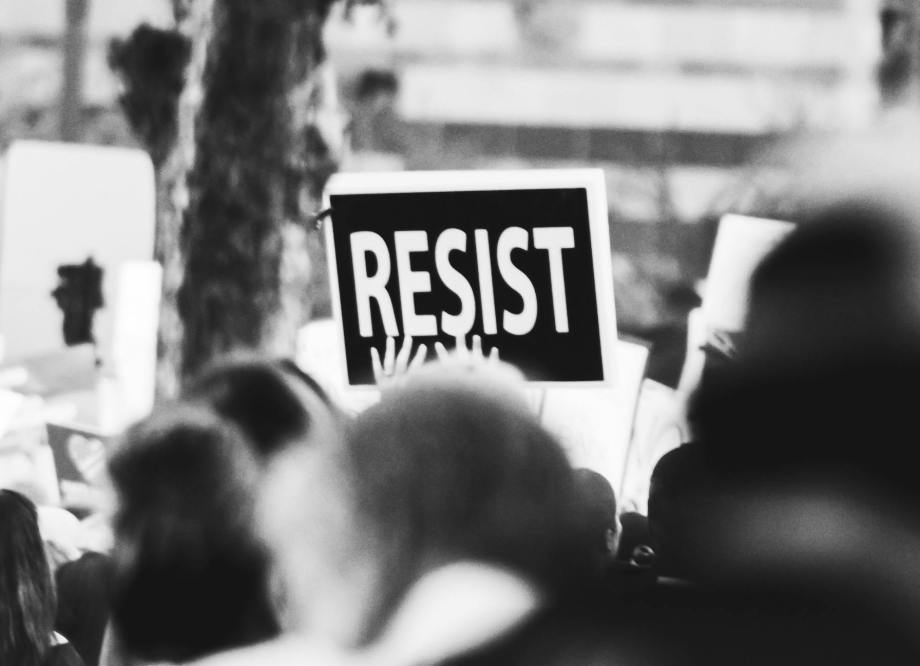
Just thinking about a panel discussion last night regarding the ICE invasion of the Twin Cities and asking myself– what would I do in that situation? What are the roles that we might each hold?
The energies are building and it is fantastic. People will be gathering in small towns and large cities around the world on April 5th to protect democracy in the US. For someone who’s been working on social and environmental justice issues since the 90’s, it’s exciting to see.
It’s always great to see these times when the big rallies happen, drawing everyone from the babies in strollers to the elders with walkers. These gatherings are important for many reasons. They are a way to let those in political power know that we’re here and what we expect of them. They are also a tool to educate the public as well as to share ideas amongst our fellow activists. Perhaps most importantly, they are a space in which to make connections and build our community. Which brings me to that question of what happens on April 6th?
After this upcoming day of action we will be in a completely different world and yet nothing will have changed. Large scale protests can both empower and disappoint when we wake up the next day and find there is no immediate answer. If we look at history, we learn that while the marches and rallies were what we shown through the media, it was the months and years of work between those marches and rallies that made the huge changes.
I encourage us to be prepared for that feeling of empowerment and dismay after the rally and to talk with our fellow protestors about what will we do after the rallies to create the society that we believe in. Note that I’m not saying simply to stop our current administration, but to create the society that we believe in. How do we create community and connect with eachother?
Maybe for some of us it is continuing to write our legislators for others it may be running for office. Some will start community gardens or coordinate infoshops to create spaces for people to come together growing food and sharing resources. Maybe a few will develop training programs to teach people how to do community organizing or coordinate educational events to share the stories of the many great grassroots organizers and activists who’ve come before us so that we might learn from them. There is so much to be done. There is a role for everyone.
How do you figure out what your role is? I’ve been doing this work for a long time and I don’t always know, but there is a story that might help. Many Native tribes in the US speak of the seventh generation. My friend Walt, an Anishanaabe man from the Red Cliff reservation on the shores of Lake Superior, used to speak of it in this way. He’d tell people to imagine yourself looking down a long tunnel, at the end of that tunnel is a baby. That baby is the seventh generation. If you do what is right for that child seven generations from now, you’ll be doing what is right for today.
How are you continuing to be a part of the movement and growing community where you are?
So, I’ve been trying to get back to my blog after several months away, but it seems I’m facing a mild case of writer’s block. Nothing is coming to mind. It’s just empty. There are no topics to write about there. What to do? Well, since it seems the key component to becoming a successful writer is writing, I just used the wonders of the internet and sought out a writing prompt. The one that drew me today was this. “If you could change one thing in the world, what would you change and why?”
This is actually something I’ve had the chance to ponder quite a bit over the past thirty years or so as someone who’s worked in social and environmental justice. I’ve had the good fortune to work with a lot of good people along the way. I’m thankful to say that I’ve found a few good mentors too or maybe they’ve found me or in any case we’ve found each other. There’s something those mentors hold in common. They know interconnectedness. They understand what happens to one impacts us all.
Historically, many, maybe once all, cultures understood that we are connected both to our fellow humans and to everyone and everything else, animate and inanimate, but just in really very recent years (only a few generations) we’ve forgotten and we’re getting sick. We are part of the body of the world. We can’t just care solely for the hand or the foot without the other parts of the body suffering. It makes no sense to hate a part of the body for its actions or its disease. Instead, when we recognize that we are all a connected body we heal each other.
That’s what I would seek, just for us to recognize our interconnectedness, with each other a people and with world that we inhabit and to begin to live that way again.
Now, I am wondering– What would you change?
Protests don’t work. Yes, I’ve said it. I’ve been an activist for over 30 years, spending a whole lot of time shouting slogans and waving signs, but I’ve been known to say it and will say it again. Protests don’t work. But, let me go a little deeper here and share what’s inspired this post.
On August 18th, 1920 the 19th Amendment to the US Constitution was passed giving women in the US the right to vote. (We could get into the discussion of who exactly got the right to vote, but that’s another post for another time.) Historical societies and museums across the country are celebrating the 100th anniversary of this amazing victory right now with exhibits, documentaries, and educational events. Yesterday, a friend and I went to visit the Wisconsin Historical Museum in Madison to view their exhibit on suffrage. It was an excellent display and I would encourage anyone in the area to check it out.
As we wandered and viewed the images my friend questioned whether some of the tactics used by the suffragettes might provide lessons for organizers today. Could we use any of the same tools? She lamented that protests and rallies no longer work because of the fact that we live in a world of social media in which messages move so quickly and can so easily be modified. I proposed that protests have never worked and never will, at least not on their own.
Protests are only a tool. It is the actions between the protests and behind the scenes that make the work successful or not. Protesting remains important, if well used. It is a tool that can draw public attention and influence decision makers. However, it is important not to expect that protesting on its own is going to bring change. A large portion of the museum display was dedicated to the banners, signs, buttons, sashes, and tunics worn and used during fight for the vote and later fight for the ERA. This makes sense as they are very visual pieces of history. Still, it only shows us the highlights of what was really a much more complex history.
In the 1820’s, one hundred years before the amendment was to pass, white men had gained the right to vote in most states and discussions had begun about this right for women. By 1948, the movement solidified through the Seneca Falls convention. For nearly one hundred years women met, discussed, strategized, argued. They built partnerships and alliances. They wrote letters, created newspapers, handed out pamphlets, spoke to handfuls and to huge crowds of people. They coordinated conferences. Women, and some men, committed their lives to this issue of justice. Some would never see the results of their work as they would die before the passage of the amendment.
We cannot fool ourselves into thinking that social change is some sort of fast food where we head up to the capitol or wherever to protest and come home with our win. There is much more. The struggles are long and hard, but the victories and the loves found along the way are well worth it. Take good care of yourselves my friends and keep on moving forward.
When I began Sustainable Life in Action back in 2013 the Grassroots Leadership College had only been closed for a year and I was trying to find enough work to keep my rent paid and figuring out how to keep doing community organizing. My dreams were of starting a new Grassroots Leadership College maybe statewide or maybe in northern Wisconsin along the shores of Lake Superior. It wasn’t too much later that I left Madison. Life didn’t take me to northern Wisconsin, but to Minnesota.
In those days, for me, being an activist still meant organizing people, coordinating trainings, taking part in protests, speaking at rallies, being a force, and fighting out loud in a non-violent yet intense way. While my work was for a better world most of my actions still landed in the realm of working against the evils. I loved my work. I loved getting to know people, making connections, supporting others in achieving their dreams, creating positive social change. We did create change. Every time we people connected and came to know each other, to see each other as valuable human beings we were creating change, not to mention all the battles won.
Despite my love for my life work I was burning out. That’s why I started Sustainable Life in Action. It was a tool to encourage my own self care as well as to support others in caring for themselves. It has been a helpful tool for me. I hope it has been for others as well.
My journey as an activist has reached a new stage. It is an interesting one for me. After seven years in Minnesota and one in Poynette, Wisconsin, I have returned to Madison where Sustainable Life in Action began. When I left this place I was deeply involved in the activist scene. My name was known for work I’d done, nine years running the Grassroots Leadership College, coordinating the non-violence trainings for the capitol take-over during the Walker administration, Green Party stuff, Labor Radio and board leadership at WORT 89.9fm, and more. Now, I am coming back in quietly to a place where there are many new leaders and much of the old guard seems to have disappeared or maybe just is quiet in these times of COVID. It is coming back to a place where I’ve never been before.
It’s good to stand and watch this new place as I too am in a new place internally. After looking for jobs in the nonprofit realm and at the university and colleges to no avail, feeling my stomach churn a bit as I considered roles in organizing again, I decided to go back to another of my earlier careers. I accepted a position as an infant/toddler teacher in a large local child care. I’ve been intrigued by the reaction of old friends who seem to believe that going into teaching early childhood is leaving the world of activism. These people tell me how I’ve “done my time” and that it’s okay for me to do something else.
How can there be anything that is more about social justice than caring for our children? Being an activist isn’t all about holding up signs and shouting slogans. Being an activist is about how we live our lives. At this phase of my being, much of my time will be dedicated to holding the little ones and showing them love. I’ve also chosen to commit my time to being creative, telling my stories, and playing with art. All these things are important. I haven’t done my time, none of us has. We all have a duty to care for this place and for each other each day for the remainder of our time. How we do it is up to us.
Take good care of yourselves. That’s where it all begins.
Education, Information, Motivation
Epic fantasy & military sci-fi author.
Pilgrimage; Walking with Purpose.
Every step for a brighter path
True wealth is the wealth of the soul
Maximize Your Happiness, Well-Being, & Life Satisfaction
Gaming News and Review
Discover expert TEFL guides and digital nomad tips from 12+ years of experience. Start your teaching journey abroad or online with our free resources today!
Shape Your Mind, Body, and Spirit to Prosperity
visionary author
This site is about overcoming the struggles of Leukemia and the struggles of the effects of the post stem cell transplant.
Enjoyable Information. Focused or Not.
Let's Reduce, Recycle and Reuse!
So the world is ending ... now what?
 Sustainable Life In Action