Category: social activism

What Happens to Hungry Kids?

My work for social justice for the past few years has largely been working in special education. It looks a lot different than my days running non-profits or organizing on the streets, but ultimately the same questions are there. It’s always about recognizing the underlying issues if we want to find the long term answers.

Because of the federal government shut down SNAP is running out. Millions of people will be losing the benefits that make it possible for them to feed themselves and their families on November 1st. Many states are jumping in to hold off the crash and to keep people fed.

As a teacher at a school that serve many families that receive SNAP benefits, I’m wondering what’s going to happen. How long will states be able to keep their finger in the dike to stop the hunger flood? What will be cut from those state budgets to make it possible to keep the families fed?

Mostly, I find myself asking what happens not only in the loss of SNAP but in the fear of the loss? When families are in that spot of having to choose whether to buy food or pay rent, which will they choose? So many families are already making tough choices to make ends meet and it impacts our kids far beyond the dinner table. Families are choosing between buying food or paying for gas. When they can’t keep gas in the car, kids don’t get to school. In many schools this means that not only are they losing out on their education, but they’ve also missed out on breakfast, lunch, and probably a snack which they were entitled to via free and reduced meal programs. It’s an awful circle. Not enough money for food and gas, so buy gas, then no food at home so skip eating from lunch until the next day. Buy food and well, can’t get to school and parents can’t get to work.

I wonder how our attendance rates will be affected in upcoming weeks with tightening budgets and already stressed parents facing yet another strain making it more and more to keep themselves together and get their kids to school. I wonder how behaviors will change. Kids are ultimately mirrors of the stresses in their parents’ lives.

How to we amplify the voices of these kids and their families so that those in Washington can hear them? How do we make their struggle visible? How do we take this moment in time of losing SNAP and point to where it leads us with kids going hungry, struggling in school, struggling in life, and just not going anywhere?

Overcoming the Wanna-Be King: Some Thoughts on Making It Happen

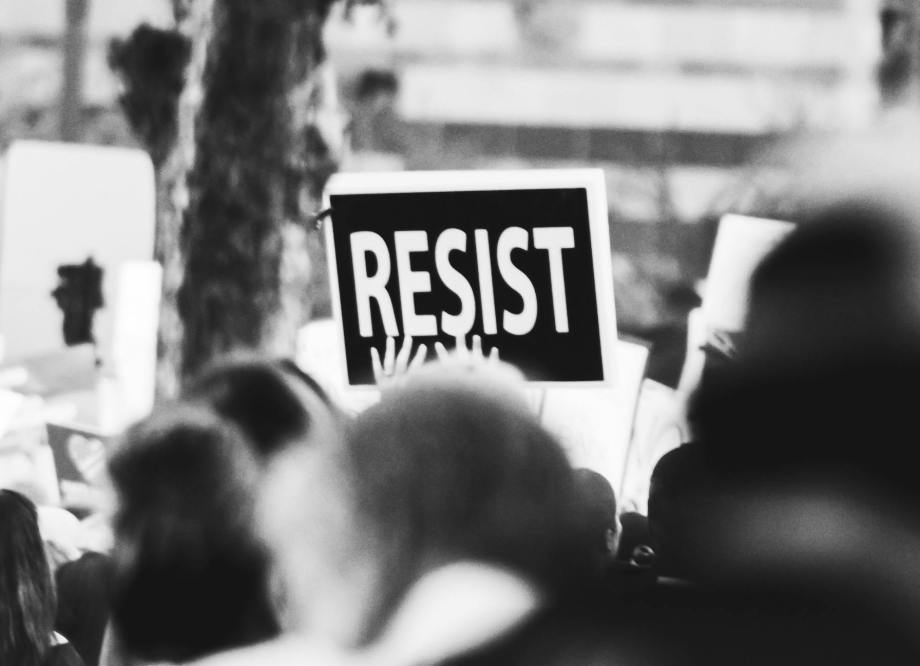
It was a great rally. It was many great rallies. It was more than 7 million people out in the streets saying “No Kings!” It was also simply a tool in the process of organizing.

I started as a professional community organizer back in the late 1990’s working for an organization called SOCM in East Tennessee. I was just out of college and had the justified anger and the will to fight every day for social social justice and the big environmental wins. I was there to stop the multinational corporations that were clearcutting the foresting and stripmining the hills. I knew if we just fought hard enough, rallied enough, yelled loud enough, we would win. We had to win. There was no other option. We had to save the world.

Every month I had to take on the hardest struggle of my organizing work. I had to first write my work plan then, even more challenging, I had to sit down with my boss, Mo, and review and edit that work plan. Every single month Mo would ask me the same question multiple times as we went down my list of things to do. She kept asking me over and over– “How does this move the work forward?”

That question still echoes in my mind. “How does this move the work forward?” Rallies are great. They are important. Writing to your legislator, voting, writing letters to the editor, signing petitions, volunteering, and some many activites are wonderful things. But, we must remember that each is simply a tool. What is it that we are working to do? It’s not enough to simply point out that Trump is not good for the US or the world. We have to develop and work toward a different answer.

Are we working to save democracy? What does democracy really look like? What is the role of the grassroots in a healthy, functioning democracy? Once we start asking ourselves those questions and really coming up with our vision of what a healthy, functioning democracy based in the power of the grassroots might look like then we can speak to that question “How does this move the work forward” with each and every action that we take. Each thing that we do needs to move toward the goal.

We don’t rally for the sake of rallying. Rallies are a tool. Let’s use them in the best ways possible. Let’s ask ourselves “How does this move the work forward?” When we make our path and goal clear the seven million engages beyond the day of the rally and the movement multiplies. We can win. First step is knowing what winning is. Is our goal to save or rebuild democracy or is it simply to get Trump out of office? Second step is figure out what we need to meet that goal. Third step is to determine how we get those things that we need whether it be redistricing or strong presidential candidate or any of a hundred other things. Next we prepare to act while asking ourselves every step of the way, “How does this move the work forward?”

It is a long and hard journey. We know that. We also know that long journeys are often much easier once we pull out a map. It’s time to create our map of where we want to go.

What Happens on April 6th?

The energies are building and it is fantastic. People will be gathering in small towns and large cities around the world on April 5th to protect democracy in the US. For someone who’s been working on social and environmental justice issues since the 90’s, it’s exciting to see.

It’s always great to see these times when the big rallies happen, drawing everyone from the babies in strollers to the elders with walkers. These gatherings are important for many reasons. They are a way to let those in political power know that we’re here and what we expect of them. They are also a tool to educate the public as well as to share ideas amongst our fellow activists. Perhaps most importantly, they are a space in which to make connections and build our community. Which brings me to that question of what happens on April 6th?

After this upcoming day of action we will be in a completely different world and yet nothing will have changed. Large scale protests can both empower and disappoint when we wake up the next day and find there is no immediate answer. If we look at history, we learn that while the marches and rallies were what we shown through the media, it was the months and years of work between those marches and rallies that made the huge changes.

I encourage us to be prepared for that feeling of empowerment and dismay after the rally and to talk with our fellow protestors about what will we do after the rallies to create the society that we believe in. Note that I’m not saying simply to stop our current administration, but to create the society that we believe in. How do we create community and connect with eachother?

Maybe for some of us it is continuing to write our legislators for others it may be running for office. Some will start community gardens or coordinate infoshops to create spaces for people to come together growing food and sharing resources. Maybe a few will develop training programs to teach people how to do community organizing or coordinate educational events to share the stories of the many great grassroots organizers and activists who’ve come before us so that we might learn from them. There is so much to be done. There is a role for everyone.

How do you figure out what your role is? I’ve been doing this work for a long time and I don’t always know, but there is a story that might help. Many Native tribes in the US speak of the seventh generation. My friend Walt, an Anishanaabe man from the Red Cliff reservation on the shores of Lake Superior, used to speak of it in this way. He’d tell people to imagine yourself looking down a long tunnel, at the end of that tunnel is a baby. That baby is the seventh generation. If you do what is right for that child seven generations from now, you’ll be doing what is right for today.

How are you continuing to be a part of the movement and growing community where you are?

Prepared and Peaceful–Some Ideas for a Safe and Nonviolent Movement

There are hundreds of thousands of people across the US and allies around the world standing up to protect democracy. It is our time to work toward the vision of the Seventh Generation. It is our time not just to find against, but to work toward the world that we want for the children coming seven generations from now. Peaceful protest is one piece of that.

In 2011 in Wisconsin, the TAA (Teaching Assistants Association) led a group into the state capitol to protest Act 10, a bill that would significantly limit workers rights including the right to collectively bargain. At the time, organizers thought they were just leading another action like many others. It became much more than that. Within hours it became clear that the protest was growing and it was time to occupy the state capitol. The occupation continued for several weeks and included hundreds of thousands of people from the seasoned activists to the babies in strollers. It inspired other actions around the country and lit a fire to be engaged in democracy for many.

One thing that helped the capitol occupation in Wisconsin happen was a small team of people who created “Prepared and Peaceful”, a simple two page flyer that gave people the tools needed to participate in a non-violent action, and took that flyer around to people getting into conversations about nonviolence and providing mini trainings to thousands encouraging everyone to share what they learned.

I had the good fortune to be a part of that team and to still have the pdf for that flyer. As we prepare for actions around the country again, I’ve pulled out that flyer and updated it to help organizers and protest attendees everywhere. If you’d like to see the original content, it’s also available in my blog post Prepared and Peaceful– Bringing Back the Nonviolence Training from the Wisconsin Capitol . Electronic copies of the pdf of the flyer are available on request.

Prepared + Peaceful

Each of us is here because we’re committed to something important. How we express that commitment matters. Remember, the whole world is watching. For your safety, the safety of others, and the safety of the protest, we ask that you plan ahead, consider your options carefully, and get whatever support you need to remain calm and peaceful in the event that we are asked to leave. Nothing written here is intended as legal advice. We just want every person here to make informed choices about if, how, and when to leave.

NONVIOLENCE
Nonviolence is a philosophy, a lifestyle, and a strategy. Here we address it as a strategy to:
• Keep the public on our side
• Inform our interactions with counter-protestors
• Inform our interactions with police (many of whom support the goals of this protest)

Strategies that support our ability to practice nonviolence include:
• Connecting with others
• Planning ahead, visualizing nonviolent responses, role-playing
• Staying sober and free of alcohol/illegal drugs
• Song, prayer, meditation, compassion—remaining centered, calm, and focused on purpose

CONNECTING WITH OTHERS
Affinity groups are a long-standing way of organizing nonviolent protest. Consider forming a small group of people you already know or meet here to:
• Watch out for each other
• Know each other’s contact information
• Help each other stay healthy and safe (food, sleep, medications, mood, etc.)
• Have a designated meeting place if you get separated
• Decide together what actions you’ll take
• Support each other to leave if anyone can’t stay nonviolent
• Have a plan for what to do if you are at risk of arrest

BEING WELL
One of the biggest health concerns in a situation like this is burnout. Take time to take care of yourself. Use your affinity group to support you.
• Breathe consciously. Even a few deep breaths can make a real difference in your ability to think clearly. Make a habit of breathing consciously 10-15 minutes every day.
• Rub your feet! After a long day of being involved in protests, get the blood circulating, then elevate your feet so they’re less swollen in the morning.
• Be sure to take all medications as prescribed. See “Being Arrested” for how to prepare if your meds are critical to your moment-to-moment well-being and you plan to risk arrest.

PLANNING AHEAD
To avoid unintended consequences, consider in advance: “If the police ask us to leave, will I leave when asked, or will I refuse respectfully?” This is your individual choice. Opinions differ on whether or not it would be useful for the movement for people to be arrested. If you are told to leave, you have three choices: Leave peacefully, cooperative civil disobedience, or passive civil disobedience.

LEAVING PEACEFULLY
• Follow police instructions
• Do not interfere with arrests of others, even verbally
• Leave—walk, don’t run
• Meet up with your affinity group to confirm that everyone is away who intended to be away
• Provide planned support for anyone in your group who stayed

CIVIL DISOBEDIENCE is the active, professed refusal to obey certain laws, demands, and commands of a government. It is a nonviolent resistance tactic that involves finding ways to achieve our goals without harming people.
• If you choose to stay, breathe, sing, center, pray, meditate, remain calm
• Recall the police are largely in support of the protest goals and want to keep the charges minimal

COOPERATIVE CIVIL DISOBEDIENCE
• Respectfully let the officer know you do not want to leave but will cooperate physically
• Stand & hold your hands together in front of you
• Do not react/resist/pull away in any way to avoid escalated charges
• You may be given a citation on the spot and released, or transported to a processing center &
given a citation (this would typically include a fine and court date)

PASSIVE CIVIL DISOBEDIENCE
• Respectfully refuse to leave
• Sit down or go limp
• This will likely result in arrest, and if done completely nonviolently should be a misdemeanor
• Do not react/resist/pull away in any way to avoid escalated charges
• See “being arrested” below

BEING ARRESTED
• Recognize that remaining limp while being physically removed can be extremely challenging, can be dangerous to you, and could possibly be considered resisting arrest, a greater charge.
• Don’t make sudden moves around the police or touch them—this could be construed as assaulting an officer, a greater charge.
• Consequences could be different for non-US citizens, students, minors, people with outstanding warrants or past criminal records. Get legal advice before deciding to risk arrest.
• The police may use zip ties to cuff your hands. Keep your hands, arms and shoulders as relaxed as possible. Use very gentle shoulder rotations to keep the blood moving. If your hands are behind your back and swelling, get them above your heart by going down on your knees and bending your head forward, so your hands rest on your back.
• You can ask where you are being taken, but if you aren’t told, don’t worry.
• Once in police custody, cooperate fully as you are transported, fingerprinted and photographed.
If you resist, you will be jailed.
• Don’t lie to the police. Give them your real name and contact information. Not to do so is a crime.
• Provide information about medical conditions or medications. If it is important that you continue medications while in custody, be sure to bring several days’ supply with you in the original prescription bottle. Also have with you a doctor’s note specifying the importance of those meds to your health. Without this, your treatment will likely be delayed—perhaps significantly.
• Don’t answer other questions. Say, “I want a lawyer. I will be silent until I get a lawyer.”
•The ACLU and lawyers hired by the unions will be tracking who is arrested and will do their best to make sure everyone gets legal support, as long as they are simply in trouble for nonviolent civil disobedience. Our understanding is that they will NOT give legal assistance to people who get charged with assault on an officer, drug charges, etc. (*note* the information in this point is from 2011. I encourage local organizers to work with unions, the ACLU, and other resources to be prepared to provide legal support)
• Legal support is being coordinated through the number below. During the day, a person will answer. At night, a recorded message will provide the numbers for people on call that night. (insert phone number here)
• Write this number(insert legal support number here) on your body. If arrested, you will not have your cell phone or notebook.

prepared + peaceful
training for being in and around the Capitol
updated March 27,2025

Thoughts On Being a Part of the Wisconsin Movement

It’s been twelve years now since thousands of angry, scared, and broken hearted Wisconsinites spent weeks camping out on the cold marble floors of our state capitol in an attempt to protect workers rights. While we didn’t win an immediate victory, we did change what organizing looked like in Wisconsin and throughout the US.

I was the person that the Teaching Assistants Association (TAA) called on when they realized that what began as a small protest was going to become a massive event and had the possibility of becoming dangerous. They asked me to coordinate non-violence trainings. During the weeks in the capitol I worked with a great team to bring together dozens of skilled trainers to provide non-violence training to thousands of people and the people of Wisconsin stood strong and peaceful. Here are few thoughts that I shared back then. I think that they may still ring true in many of the struggles that we face today.

Thoughts on Being Part of the Wisconsin Movement

  1. Why are you here?
    If you are here to defend the capitol building, you are in the wrong place. If you are here to prove your belief that police are fascists, you are in the wrong place. If you are here to prove your righteous acts, you are in the wrong place. If you are here to prove Republicans bad Democrats good, you are in the wrong place. Movements depend on a shared sense of deeper purpose. The Wisconsin movement is complex because it brings together such a wide variety of groups with many reasons for acting. In order for us to succeed in the long haul we must have a shared sense of purpose. I would suggest that the purpose we share is to create a Wisconsin in which all people have their basic human rights met and in which the people of the state drive the government, not the other way around.
  2. What is Civil Disobedience and Why Do It?
    Civil disobedience is intentional illegal action used to address injustices in the system. It is not simply actions used to make police officers work harder or to add excitement or interest. It is well thought out and used to attain a goal that moves us toward that bigger purpose of meeting the human rights of everyone in our state and gaining control of the governmental process. Civil disobedience is a tactic to be used when the legal means don’t work. It should be well thought out in advance and taken on only with people you trust implicitly. Plans should be made in advance to deal with any repercussions of your actions. Remember that the police, the courts, and our government have been dealing with protestors a long, long time. They are prepared. You need to be too. Doing the action and getting arrested is the easy part. Dealing with the repercussions can be more time consuming and difficult. Ask yourself “how will my action help the movement?” before taking any action.
  3. What about me?
    Me is an interesting character in the movement, whoever that me is. Every action that each of us takes, positive or negative, affects every other person in the movement community. Movements are in some sense temporary minority groups. This is not to suggest in any way that movements or members of movements face the same levels of discrimination or oppression. What we share is that majority culture is quick to define minority groups by the actions of single individuals “all Black men are x,” “all women, all youth, all insert your favorite minority here are y.” The same thing happens in movements. You are a representative of the movement whether you want to be or not. So, it’s up to you to measure each action you take, even the mundane ones like the words you use or when and where you opt to play the drum or whatever else, to ask yourself is this
    going to move us toward our goal or away from it. Everyone in Wisconsin is going to be affected by the decisions of our courts, the legislature, and the governor. We need a movement that is made of all ages, all races, and all backgrounds. This
    isn’t some liberal, progressive, or even radical group. This is Wisconsin. We all drink the same water. Every person that you see could be a part of the movement. Each one could bring something that we need. It’s up to each of us to build the bridges, to win people to our side, to encourage that understanding that we all drink the same water.
  4. But I just need to be me!
    If you are in a spot in which you feel a need to do something that isn’t going to help the movement take a break, step away for a moment to come back stronger. This fight doesn’t end with this budget session or even with the recalls. We’ve got a lot of work to do and it’s going to take a long time. Governor Walker, the legislature, the cops, the media, and sometimes even your fellow protestors are going to do stuff that in your mind is just idiotic and really ticks you off. If you can deal with it in ways that are both logical, empathetic, and feel right in your heart go ahead and deal with it. If you feel worn down, angry to the point of not being able to control your actions, deeply depressed or otherwise just don’t feel yourself, step back. We are a large group. We’ll cover for each other, so everyone can have a break.
  5. Going for the long haul
    Bad stuff is happening in Wisconsin’s government, stuff that will take years to fix. We’ll need to fix it and we can. It will take a lot of work, a lot of creative thinking, and a lot of coalition building and strengthening. Right now a lot of people are burned out, more than I’ve ever seen in my 20+ years as an activist and organizer.
    Go ahead and mourn. There has been a death in the family, many deaths. We’ve lost much that we love and depend on in this last legislative session and it deserves to be mourned. Crying is welcomed here. So, is talking, writing, song, lifting weights, prayer, running, hitting the punching bag, any and all of the healthy means of processing loss and regaining strength.
    Angrier than you can explain? That’s good too if you use it. Organizers often call it ‘cold anger.’ If you can keep your anger controlled and directed toward supporting our forward movement in healthy ways, it is one of the best tools we have. Remember we are all family here. Take care of your brothers and sisters and let them take care of you. Caring for each other makes us each stronger.
  6. What’s my role here?
    In my work we say “everyone a learner, everyone a teacher, everyone a leader.” It works here too. Each and every one of us is more than a body at a rally. We need you. Ask questions. Share what you know. Support others in doing the same. Share your talents, whether it’s facilitating meetings or baking cookies. Not everyone gets the spotlight, but everyone keeps the movement alive and strong. Thank you everyone for what you’ve been doing to keep us moving!

Blue Eyes Flashing and other words

I’ve been continuing to face an ongoing struggle with writer’s block. I strongly suspect a sort of fear of writing, a fear of what I might learn if I go to deep, but I have no choice. There are words that I need to share and they’ll be there inside me until I let them out. So, I am continuing to work on letting them out. Today I’m going back through old journals and finding bits and pieces to revise and share more publicly. The first piece has no title yet, but maybe I’ll call it Boots. It was written on 7-6-2000 on the shores of Lake Superior while on a walk around the big lake to protect the waters.

I am standing here

on a precipice

looking out

afraid to fly

wanting so badly to walk away

to not

defend

my people

or

my place

but my boots

will not walk backward

like the staff

my being is feathered

and I will

fly

Another story that I found came from a few years earlier. It is called Blue Eyes Flashing and is dedicated to my great aunt Sr. Christine Mondloch. Sr. Christine was born in 1898. She served as a School Sister of Notre Dame, teaching school for many years before retiring. She lived out her final years in Elm Grove, Wisconsin in a tiny blue room in her convent. She was an inspiration to me. She found such joy and meaning in the simplest life.

Blue Eyes Flashing

(a revision of the 3-4-96 version dedicated to Sr. Christine Mondloch who walked on 2-24-96)

Blue eyes flashing

From behind the clouds

Not recognizing a brother

Only crying out

In fear

Imagining your smile

Wishing for you the great beyond

Remembering the cardboard cutouts 

Stored away in my parent’s basement

And wondering how the demons

Caught your spirit, stole your soul

All my life you gave me cardboard boxes,

Toothpick flags, and empty suitcases

All your treasures in the world

I think of you of your autobiography

98 years written on one page

I remember the tiny blue room

Charity called your home

I walk the halls and feel your footsteps

In time with mine

Changing One Thing

So, I’ve been trying to get back to my blog after several months away, but it seems I’m facing a mild case of writer’s block. Nothing is coming to mind. It’s just empty. There are no topics to write about there. What to do? Well, since it seems the key component to becoming a successful writer is writing, I just used the wonders of the internet and sought out a writing prompt. The one that drew me today was this. “If you could change one thing in the world, what would you change and why?”

This is actually something I’ve had the chance to ponder quite a bit over the past thirty years or so as someone who’s worked in social and environmental justice. I’ve had the good fortune to work with a lot of good people along the way. I’m thankful to say that I’ve found a few good mentors too or maybe they’ve found me or in any case we’ve found each other. There’s something those mentors hold in common. They know interconnectedness. They understand what happens to one impacts us all.

Historically, many, maybe once all, cultures understood that we are connected both to our fellow humans and to everyone and everything else, animate and inanimate, but just in really very recent years (only a few generations) we’ve forgotten and we’re getting sick. We are part of the body of the world. We can’t just care solely for the hand or the foot without the other parts of the body suffering. It makes no sense to hate a part of the body for its actions or its disease. Instead, when we recognize that we are all a connected body we heal each other.

That’s what I would seek, just for us to recognize our interconnectedness, with each other a people and with world that we inhabit and to begin to live that way again.

Now, I am wondering– What would you change?

Looking at Life’s Work

I was interviewing for a new job yesterday and was asked a question that while not totally unheard of was one I’d not heard often in job interviews that I’ve done either as the interviewer or the interviewee. I was asked how I identify myself or what I enjoy outside of my work life. What a wonderful question! Thank you for letting me know that you, as an employer, want to know me as a person that you value my work/life balance.

I grew up on a farm. My parents both grew up on farms as did their parents and their parents before them. For years I used that as a reason or maybe an excuse to devote my life to my work, putting in far more hours and more brain power than I was paid for. I would talk about how I grew up learning that farming wasn’t a job it was life’s work, and that’s what my work was as well.

Looking back now, I’m questioning what that “life’s work” means. Sure there is a lot about the work that simply needs to get done when it needs to get done no matter what. When the cows get out, you need to get them back in. There are no choices there. I think I misrepresented the 24/7 nature of “life’s work” types of jobs though. My Mom and Dad worked a lot, us kids spent our time helping out too. But, we also went swimming, watched tv together, took vacations, did all the things that others around us did that didn’t have “life’s work” kinds of jobs. The big difference between a job and life’s work isn’t the level of commitment, but the level of connection. For some farming is a job, a really hard job, for others it is life’s work. For me social justice is my life’s work.

I am thankful for this look at life’s work. It gives me a greater permission to take good care of myself as I move forward, continuing to do what can be very difficult and emotionally draining work. Today, I’m encouraging each of us whose had that great gift of being able to do the work that we feel called to, that we are connected to, that “life’s work” to celebrate that calling by caring for ourselves so that we might continue.