We are in a hard time of struggle both internal and external. It is a time to find our something to hold on to that keeps us safe while we grow strong with love.
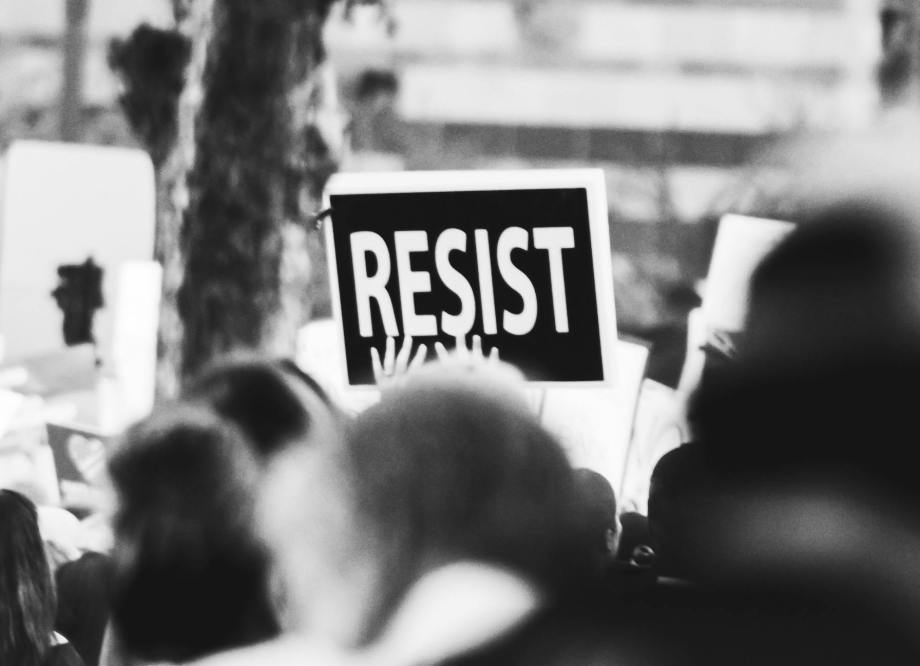
Like millions of others around the world and thousands here in Madison, I stood holding a candle last night to honor the passing of Renee Nicole Good and the far too many others who have been murdered along with her by ICE. Standing there in the cold I found myself thinking about the past 30+ years that I’ve spent standing on those capitol steps at rallies and vigils, working toward justice and peace, and recognizing the connection of my years to the those of others. We’ve stood for so long and each time the crowds are larger and stronger.
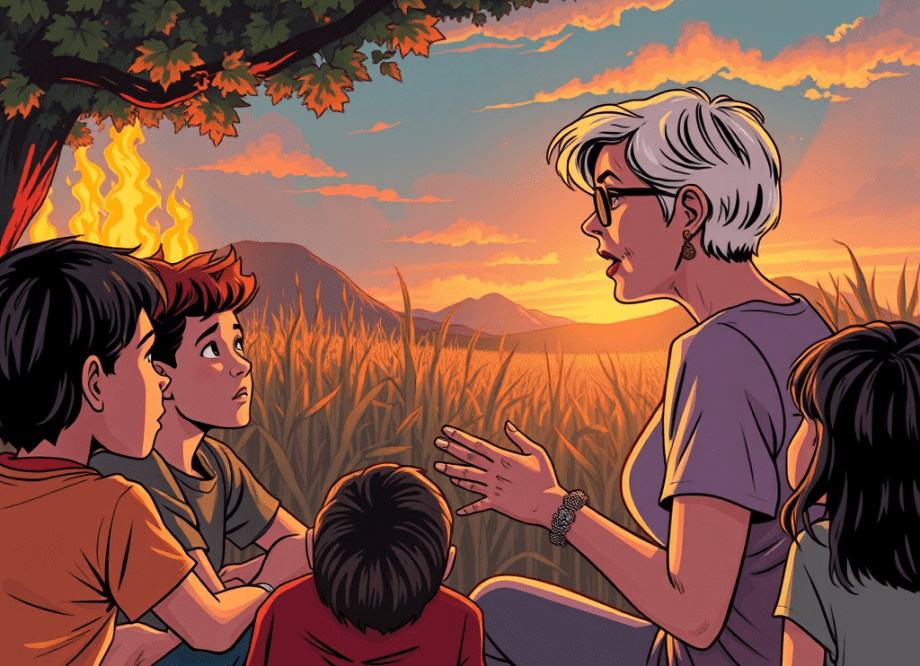
I thought about the Anishanaabe prophecies of the eight fires and wondered if we are indeed at that place spoken of in the seventh fire where we are facing that critical choice between destruction and balance. I believe we are and we must seek that balance both internally and as a whole if we are to find peace. Afterall, peace doesn’t come through war. I wish I had some answers. All I know right now is that we must reach out in peace. We must find those seeds of joy admist the chaos and nuture them, help them grow into the trees of celebration that they are meant to become.
In this moment I am just reaching out to all of you, my brothers and sisters in the struggle and sharing this electronic hug and wishing you love in your lives.
It’s been twelve years now since thousands of angry, scared, and broken hearted Wisconsinites spent weeks camping out on the cold marble floors of our state capitol in an attempt to protect workers rights. While we didn’t win an immediate victory, we did change what organizing looked like in Wisconsin and throughout the US.
I was the person that the Teaching Assistants Association (TAA) called on when they realized that what began as a small protest was going to become a massive event and had the possibility of becoming dangerous. They asked me to coordinate non-violence trainings. During the weeks in the capitol I worked with a great team to bring together dozens of skilled trainers to provide non-violence training to thousands of people and the people of Wisconsin stood strong and peaceful. Here are few thoughts that I shared back then. I think that they may still ring true in many of the struggles that we face today.
Thoughts on Being Part of the Wisconsin Movement
Yesterday, 19 children and 2 adults lost their lives at Robb Elementary in Uvalde, Texas. That means we’re at nearly 250 school shootings since back when Columbine first shocked and terrified us all. Thousands of children and their caregivers and teachers have died. Others have been left behind to struggle with the loss.
Each time another shooting happens the response is much the same. We cry. We mourn. We say this must never happen again. Yet, it happens again. Why?
It happens because there are no easy answers. It happens because the changes needed are needed at many levels; personal, community, political, maybe even spiritual. It happens because the changes require more than the wonderful organizers who are already out there working day and night trying to save the world. The changes require all of us taking action. There are many ways to take action each day. Some listed here may seem obvious and direct. Others may leave you questioning a little. That’s okay. My thoughts here are based on the idea that everything is connected.
Those are just a few thoughts for the moment. I am sure there are many more. I would love to hear yours. Take good care and wishing you all peace and healing
I was back at the state capitol today. Sometimes I wonder if I should maybe just avoid that building. It seems every time I go there something makes me cry.
Today, I was there to join with hundreds of other to remember and honor all the missing and murdered Indigeneous women. As of 2016, the National Crime Information Center reported 5,712 cases of missing Native American women and girls. I am terrified to considered how much the numbers have grown since then. Indigenous women and girls are ten times as likely to be murdered as all other ethnicities. More than half of Native women and girls experience sexual violence. According to the Center for Disease Control murder is the third leading cause of death among Indigenous women.
Today, we sat and listened to the stories of survivors and to stories of the families and friends of those who didn’t survive. I found myself in tears and thinking about some of the little girls I got to know during my time in Minnesota. In particular, I found myself thinking about two little girls who are now both just coming to that stage of life of entering womanhood. I remember that time being confusing and hard enough with body changes, the discovery of sexuality, and noticing the cute guy at school. These girls live in a different world and I could only cry as I can’t protect them on my own.
Why is it this way we wonder? Well, all I can come down to is that it’s about power. These little girls, these women are too powerful. If they are allowed to keep their power, the forces of evil would be crushed. Rape is a tool to control and break down not only the individual, but the whole community. If the women are controlled with the force of violence and fear, the children are controlled. If the women and the children are controlled, the men are broken. Nothing works anymore. The community struggles to merely survive when the women are no longer safe.
Who profits when the community struggles? Big oil, mining companies, all the corporations who make money off of Indigenous people’s lands and waters. That’s why we see the numbers of women disappearing and being murdered going up when the mining companies and oil pipelines come in. It’s control. It’s breaking down the community and tearing out the heart.
So, what do we do? Listen to the women and the girls. Honor them and respect them. Don’t allow for this injustice to continue. Remember that these women, they are the keepers of the water. Respect the water and you will respect the women. The two are not separate. Care for the water. Care for the women. I can’t protect those little girls on my own, but together we can. Each action, every day keep remembering. Care for the water. Care for the women. Respect the water. Respect the women.
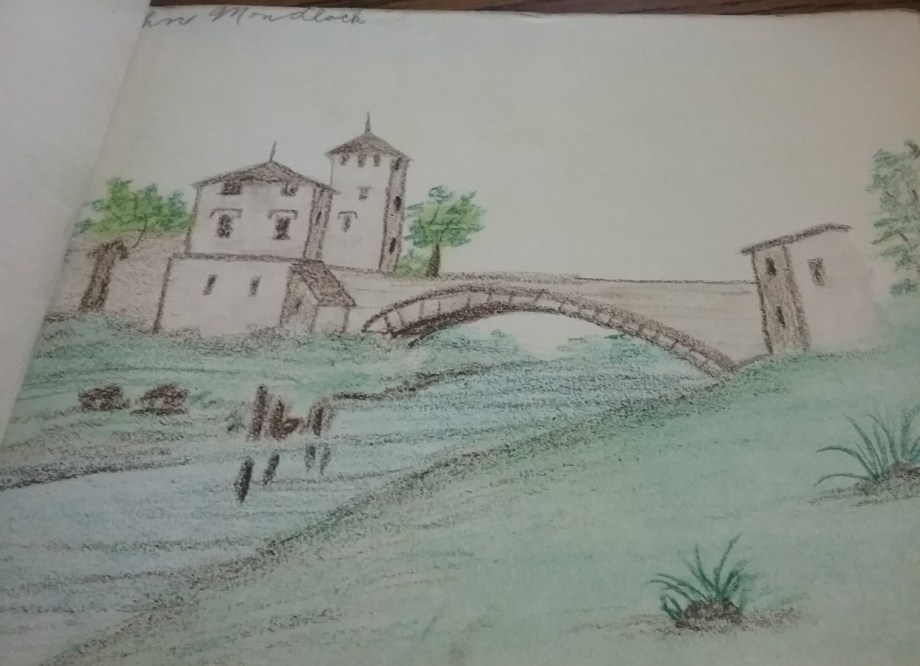
Time confuses me more as it passes. It used to be so linear. Babies were young and old people were old. Now, I’m not so sure. April 1st would have been my Grandpa Mondloch’s 122nd birthday. I never met the man. He died in 1935, … Continue reading Mirrors of Time
Ah the wonders of returning to the “thirty square miles surrounded by reality!” Yes, that is what many know Madison as because it is a community unlike any other in the state of Wisconsin. Its hyper-political, ultra-educated, super-liberal personality makes it a strange juxtaposition to the grounded-ness of the surrounding counties in their simply seeking to work hard and live right style of being.
I was reminded of where I am by several interactions this week. One was on my bus ride to work. The driver had just stopped for three teenaged girls, but wasn’t opening the door. Instead, he was shouting at them to put on their masks, telling them he’d open the door when they were masked. Two already had their masks on, the third was putting hers on as she prepared to board. I saw no reason to shout or prevent them from boarding. It seemed their behavior was much like my own had been, still getting my mask on as the bus stopped. The difference was stark though. I’m a middle-aged white woman and they’re teenaged black girls.
I am impressed by these girls, despite the rude and cruel behavior of the driver they moved forward as they seem to each day. They get on the bus, find seats by a woman who I think works at their school, and start to share stories of their day with her. They’re good kids, well behaved, and take good care of each other. I find myself wondering how long they can withstand the expectation that they are something other than good kids? How long until they meet the driver’s expectations because they are told through such actions that they are supposed to be trouble makers or somehow less than?
I found myself too in a conversation about race with a group of white folks from a predominately white group this week. The discussion was about welcoming people of color into the organization. I appreciated the openness and honesty of the group talking. Despite not knowing each other well, or maybe because they didn’t know each other well they took some risks in what they were willing to say. The conversation was interesting and unusual. Instead of focusing on the evils of racism it centered more on the question of being with people of like experience. Asking why would the organization want to increase the number of people of color involved? Do we seek to engage more people of color simply to make ourselves feel better? What does that mean? What value do we bring to the relationship? What are we willing to change in order to share ownership? Are we willing to change?
The conversation was both valuable and ugly. While there were no words spoken in anger and everyone seemed to be taking pause to think deeply, processing ideas and feelings fully, being open to learning still the conversation brought such ideas to light that I could almost imagine the hoods. The questions, the ideas; asking if “they” might not just want to be in “their” own group, if “they” might not want to be with “us”, if “they” might want to have “their” own kinds of celebrations, music, and ceremonies, if “they” might somehow be different than “us.”
These are well educated people. Yet, the world created dividers and told them who the other was. It was so much like the bus driver and the girls. Expectations are set, regardless of reality. I can only hope that we can change ourselves and become like the school staff person on the bus who each morning greets the girls with a smile and a kind word, who sees who they really are.
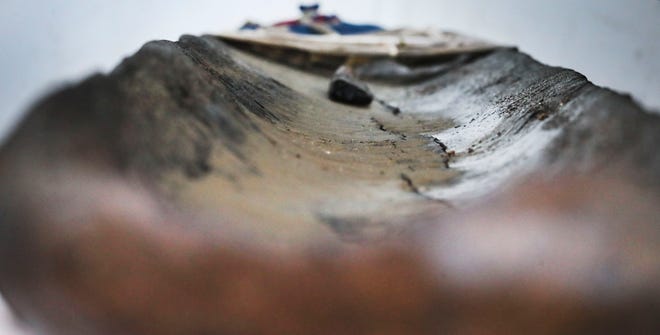
I was eating my oatmeal and flipping through Facebook posts this morning when I saw a news story about a 1200 year old canoe that was raised from the lake near where I live yesterday. Several friends had already commented on how wonderful it was … Continue reading What is Ours?
I gave up my driver’s license two months ago after I had a seizure on my way home from the grocery store. Since then I’ve been using my old license just for identification until getting settled in my new apartment. I moved at the beginning of the month and today I was finally able to head to the DMV to replace the no longer valid license with a new state ID card.
The exercise of getting a state ID was a good reminder of what I have to be thankful for and a great look at how class and ability impact our lives. My seizure in August meant leaving the small town where I was living to return to Madison. Madison has public transportation. It is, at least in theory, an accessible community in which to live.
My trip to the DMV today was via the bus. Taking a cab could have been an option, but it cost more than I cared to spend for a trip to just get a new ID. It began by needing to schedule my day according to when the best route options were available. Then waiting at the stop to ride the half hour on what would have been a ten minute car trip. Along the trip I read the information about how the busses are being cleaned during COVID and the rules riders need to follow and pondered how much each ride increased my risk of disease.
Thanks to being given the wrong form and a mildly confused elderly man in the line front of me, my visit to the DMV took a bit longer than expected. That meant walking out the door just as the ideal bus to take home pulled away. So, I walked about a half mile to catch another bus. My trip that would have taken probably about an hour or maybe less if I were driving took about three hours on the bus.
I don’t ride the bus often, but when I do it is clear who the busses serve. The vast majority of people I see are BIPOC, low income, homeless, students, and people with mental health issues. If my experience today is typical and it takes three times as long to complete a task via bus or even just twice as long as it does for someone using a car, I wonder how we can expect people to get ahead? How does someone win when a bus that is a few minutes late makes you late for your transfer or your job? How do you hold control in your own life when you are living by the bus schedule and others set their own times?
The busses are a place where social and environmental justice come together. There are many who care about climate change and clean water and clean air and all those things. Many who know that public transportation is environmentally more sound than private cars, but yet they don’t ride. Why not? I suspect a few things, first there is that issue of timeliness, being able to get to the places they want to go, and get tasks done and secondly there is the issue of the other riders of the bus– those who are BIPC, low income, homeless, and those with mental health issues. Could it be possible if bus service were improved and these individuals were able to begin to bridge the gap, able to access the services they need, get to work, school, and able to run their errands in a more timely way that the busses would become a more welcoming service for all while also making life just a bit better for those who need it? Sometimes we just need to draw the connections. Make it possible for folks to do the work they need to do and life gets better for us all.
Just some ponderings from today’s and a couple of other recent trips on Madison’s busses. What do others think?
While sitting in the laundromat earlier today waiting for my clothes to dry, I was paging through the news on my phone. I saw an article from WPR that said Wisconsin schools are calling the police on students at nearly twice the national rate. Kids with disabilities, Latinx, Black, and Native students are the victims of most of the calls with Native kids at the top of the list closely followed by Blacks. The article made me ask again what it is that I love so much about my home state, maybe it’s my love of wanting to make things better.
While calling the cops on these kids might simply mean a referral for a child in crisis or a warning for some teenage action like yelling at teacher and aren’t by any means all arrests, it’s still hugely problematic that kids with disabilities and BIPOC youth are being referred to law enforcement at twice the rate as the overall student population and Native kids are three times as likely to be referred as white kids. It’s 2021 and we’re still operating as if it’s against the law in Wisconsin to have brown skin or to have a disability! Come on folks we can do better than this!
While I don’t pretend to have all the answers. I do think there are a few things that put together are worth considering.
Pilgrimage; Walking with Purpose.
Every step for a brighter path
True wealth is the wealth of the soul
Maximize Your Happiness, Well-Being, & Life Satisfaction
Gaming News and Review
Discover expert TEFL guides and digital nomad tips from 12+ years of experience. Start your teaching journey abroad or online with our free resources today!
Shape Your Mind, Body, and Spirit to Prosperity
visionary author
This site is about overcoming the struggles of Leukemia and the struggles of the effects of the post stem cell transplant.
Enjoyable Information. Focused or Not.
Let's Reduce, Recycle and Reuse!
So the world is ending ... now what?
Current Events - Activism - Progressive Takes
Progressive News and Activism