Category: Native American

Reaching Out In Peace

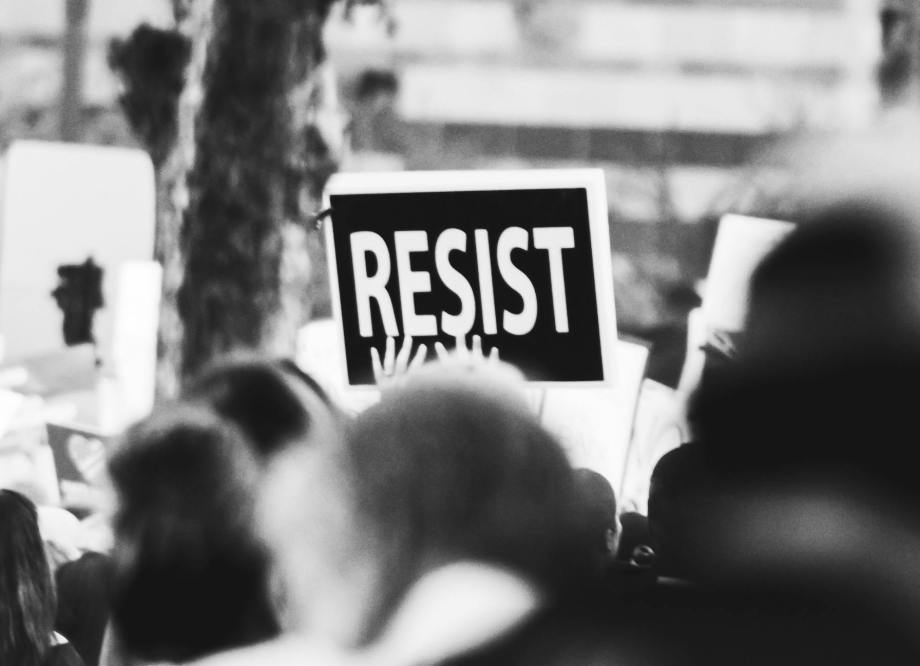
Like millions of others around the world and thousands here in Madison, I stood holding a candle last night to honor the passing of Renee Nicole Good and the far too many others who have been murdered along with her by ICE. Standing there in the cold I found myself thinking about the past 30+ years that I’ve spent standing on those capitol steps at rallies and vigils, working toward justice and peace, and recognizing the connection of my years to the those of others. We’ve stood for so long and each time the crowds are larger and stronger.

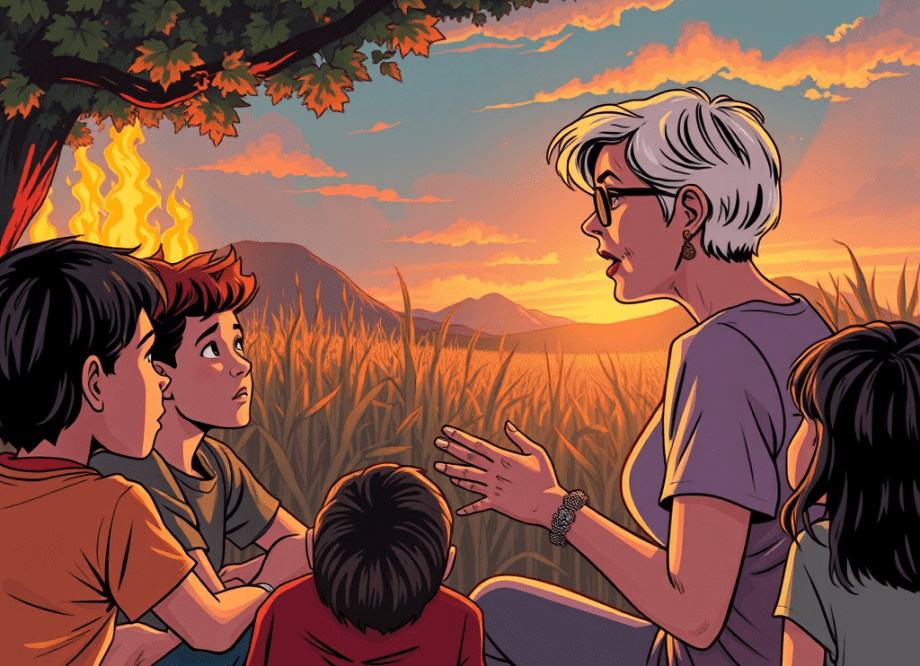
I thought about the Anishanaabe prophecies of the eight fires and wondered if we are indeed at that place spoken of in the seventh fire where we are facing that critical choice between destruction and balance. I believe we are and we must seek that balance both internally and as a whole if we are to find peace. Afterall, peace doesn’t come through war. I wish I had some answers. All I know right now is that we must reach out in peace. We must find those seeds of joy admist the chaos and nuture them, help them grow into the trees of celebration that they are meant to become.

In this moment I am just reaching out to all of you, my brothers and sisters in the struggle and sharing this electronic hug and wishing you love in your lives.

Blue Eyes Flashing and other words

I’ve been continuing to face an ongoing struggle with writer’s block. I strongly suspect a sort of fear of writing, a fear of what I might learn if I go to deep, but I have no choice. There are words that I need to share and they’ll be there inside me until I let them out. So, I am continuing to work on letting them out. Today I’m going back through old journals and finding bits and pieces to revise and share more publicly. The first piece has no title yet, but maybe I’ll call it Boots. It was written on 7-6-2000 on the shores of Lake Superior while on a walk around the big lake to protect the waters.

I am standing here

on a precipice

looking out

afraid to fly

wanting so badly to walk away

to not

defend

my people

or

my place

but my boots

will not walk backward

like the staff

my being is feathered

and I will

fly

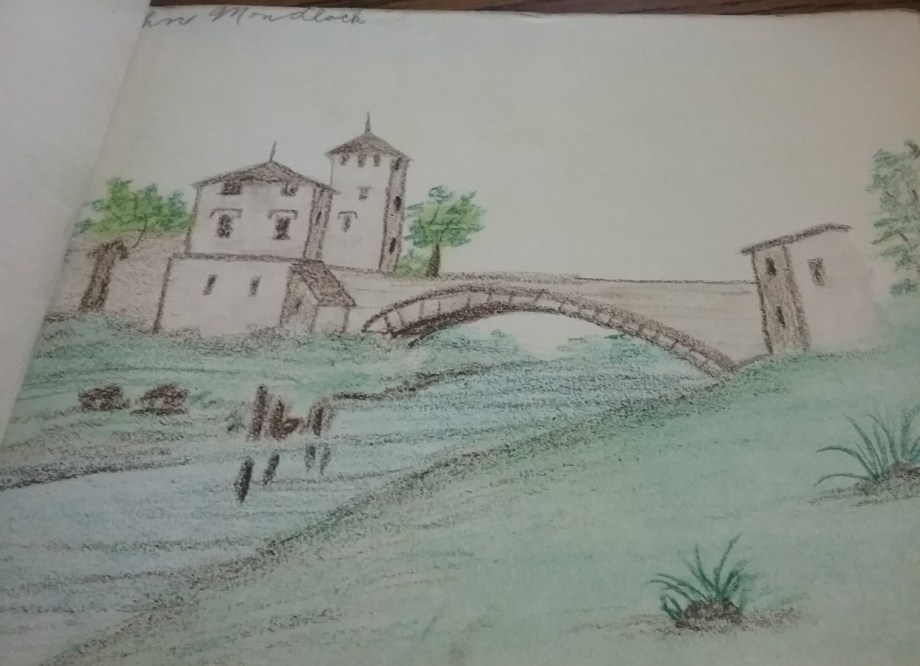
Another story that I found came from a few years earlier. It is called Blue Eyes Flashing and is dedicated to my great aunt Sr. Christine Mondloch. Sr. Christine was born in 1898. She served as a School Sister of Notre Dame, teaching school for many years before retiring. She lived out her final years in Elm Grove, Wisconsin in a tiny blue room in her convent. She was an inspiration to me. She found such joy and meaning in the simplest life.

Blue Eyes Flashing

(a revision of the 3-4-96 version dedicated to Sr. Christine Mondloch who walked on 2-24-96)

Blue eyes flashing

From behind the clouds

Not recognizing a brother

Only crying out

In fear

Imagining your smile

Wishing for you the great beyond

Remembering the cardboard cutouts 

Stored away in my parent’s basement

And wondering how the demons

Caught your spirit, stole your soul

All my life you gave me cardboard boxes,

Toothpick flags, and empty suitcases

All your treasures in the world

I think of you of your autobiography

98 years written on one page

I remember the tiny blue room

Charity called your home

I walk the halls and feel your footsteps

In time with mine

Thoughts on How to Stop the Violence

Yesterday, 19 children and 2 adults lost their lives at Robb Elementary in Uvalde, Texas. That means we’re at nearly 250 school shootings since back when Columbine first shocked and terrified us all. Thousands of children and their caregivers and teachers have died. Others have been left behind to struggle with the loss.

Each time another shooting happens the response is much the same. We cry. We mourn. We say this must never happen again. Yet, it happens again. Why?

It happens because there are no easy answers. It happens because the changes needed are needed at many levels; personal, community, political, maybe even spiritual. It happens because the changes require more than the wonderful organizers who are already out there working day and night trying to save the world. The changes require all of us taking action. There are many ways to take action each day. Some listed here may seem obvious and direct. Others may leave you questioning a little. That’s okay. My thoughts here are based on the idea that everything is connected.

  • Tell someone that you love them. If you’ve already told them, tell them again. We all need to hear these words over and over again to hold our souls together and no one wants to say goodbye with these words unsaid.
  • Breathe deeply before you act and then act with the seventh generation in your mind and your heart. Some may ask what this means. The idea of the seventh generation is simple. Imagine a long tunnel. If you look down that tunnel, way down at the other end you’ll see a baby. That baby is the seventh generation, roughly 150 years from now. If you do right by that child, you’ll be doing right for today. Always treat that baby with love and respect.
  • You don’t have to love your enemy, but do recognize that someone loves them and that someone is a valuable person who deserves not to be hurt. Every shooter, every evil politician, every horrible whatever out there has or had someone, their parent, their child, their grandma or grandpa, or maybe a teacher or somebody who cared about them or still cares about them. You don’t have to love the horrible, just know that somebody could see something in them that was good, that was worthy of love and act with that in mind.
  • Recognize the connections. Our mental health is no accident. Good mental health depends on a healthy environment, healthy diet, financial security, and strong social support networks. We each need many things to maintain our stability. Each day we must strive to move toward fulfilling each of these needs for everyone if we are to create a healthy world.
  • Be involved. Find your piece of the action whether it’s working directly on gun safety and stopping school shootings or a hundred different issues. Follow your heart and connect with your community to make the world just a little bit better. It is by the creating of good, healthy communities of many types that we heal and we stop this senseless violence and turn instead to love.

Those are just a few thoughts for the moment. I am sure there are many more. I would love to hear yours. Take good care and wishing you all peace and healing

Care for the Water, Care for the Women

I was back at the state capitol today. Sometimes I wonder if I should maybe just avoid that building. It seems every time I go there something makes me cry.

Today, I was there to join with hundreds of other to remember and honor all the missing and murdered Indigeneous women. As of 2016, the National Crime Information Center reported 5,712 cases of missing Native American women and girls. I am terrified to considered how much the numbers have grown since then. Indigenous women and girls are ten times as likely to be murdered as all other ethnicities. More than half of Native women and girls experience sexual violence. According to the Center for Disease Control murder is the third leading cause of death among Indigenous women.

Today, we sat and listened to the stories of survivors and to stories of the families and friends of those who didn’t survive. I found myself in tears and thinking about some of the little girls I got to know during my time in Minnesota. In particular, I found myself thinking about two little girls who are now both just coming to that stage of life of entering womanhood. I remember that time being confusing and hard enough with body changes, the discovery of sexuality, and noticing the cute guy at school. These girls live in a different world and I could only cry as I can’t protect them on my own.

Why is it this way we wonder? Well, all I can come down to is that it’s about power. These little girls, these women are too powerful. If they are allowed to keep their power, the forces of evil would be crushed. Rape is a tool to control and break down not only the individual, but the whole community. If the women are controlled with the force of violence and fear, the children are controlled. If the women and the children are controlled, the men are broken. Nothing works anymore. The community struggles to merely survive when the women are no longer safe.

Who profits when the community struggles? Big oil, mining companies, all the corporations who make money off of Indigenous people’s lands and waters. That’s why we see the numbers of women disappearing and being murdered going up when the mining companies and oil pipelines come in. It’s control. It’s breaking down the community and tearing out the heart.

So, what do we do? Listen to the women and the girls. Honor them and respect them. Don’t allow for this injustice to continue. Remember that these women, they are the keepers of the water. Respect the water and you will respect the women. The two are not separate. Care for the water. Care for the women. I can’t protect those little girls on my own, but together we can. Each action, every day keep remembering. Care for the water. Care for the women. Respect the water. Respect the women.

What Happened Next? Looking at the History of Underrepresented Peoples

I was watching a documentary on PBS last night about the life of Helen Keller. It was an interesting show that focused primarily on her adult years rather than the childhood picture that so many of us were introduced to as children. It made me wonder about how often we cheat ourselves by contenting ourselves with stories of history that are meant for children and that usually are missing major pieces that really make the story. I wonder how often we cheat the children in our lives by minimizing their education with these simple stories like that of the little deaf and blind girl and fail to tell them of the woman who was a prominent socialist, a skilled writer, an actor, public speaker, ambassador for US, and so much more?

Clearly, stories designed for children whether written or video or some other form are often less complex than those created for adults. But, how do we take that first story and make into a series? When we look at something like “The Miracle Worker” it seems like the story ends with the miracle of Helen learning to communicate, but in reality that’s only the beginning. We do much the same thing when we talk about many other figures in history, particularly those from historically underrepresented groups. Rosa Parks is a great example. We largely get the story that this individual woman was tired, sat down, and refused to give up her seat on the bus. Not only is that historically inaccurate, but it’s incomplete. Mrs. Parks was a trained community activist who had a history in the Civil Rights Movement. She was part of a much larger strategy to integrate the busses in Montgomery. She also remained active working for social justice through the Civil Rights Movement, Black Power Movement, as a staff person to US Representative John Conyers, and working to support political prisoners in the US among other issues until her death in 2005.

People like Ms. Keller and Mrs. Parks are so much more than what we often give them credit for. By failing to recognize the breadth of their contributions and those of others like them we fail to fully support and encourage the next generations of those who share pieces of their realities, whether those be young women, people with disabilities, people of color, Indigenous peoples, or others. Reading the children’s books and watching kids movies about these historical figures is great, by all means do it! Don’t forget the next step though. Dig a little deeper. Ask “what happened next?”